Published 2026-07-02 · Last updated 2026-07-18
Website personalization means showing a more relevant version of a page to different visitors based on real signals you already have, like new versus returning, or which ad brought them, not guessing and not surveillance. It’s worth doing once you have enough traffic and data for segment differences to be meaningful, not before. Most websites show every visitor the exact same page regardless of whether they’ve been there before, what they clicked on last time, or how they found you, personalization is the practice of changing that, and one of the more approachable ways to get more value from traffic you’re already earning.
Key takeaways
- Personalization means showing a more relevant experience based on real signals you already have, not guessing.
- It’s worth doing once you have sufficient traffic and data for segment differences to be meaningful, not before.
- Most businesses already own more personalization capability than they’re using, inside tools they already pay for.
- Personalization works best as the layer that comes after the basics are already fixed.
Is this actually your problem right now?
This guide covers what personalization is, when it’s worth doing, and how to start with tools you already own. It doesn’t cover diagnosing a page that isn’t converting for anyone, that’s a conversion problem to solve first, not a personalization one.
Stop reading here if:
- Your pages are underperforming for every visitor, not just failing to differentiate between segments, personalization can’t fix a page that doesn’t work for anyone. The plain-language CRO guide is the right starting point instead.
- You already know personalization is right for you and want the honest “is it worth it yet” decision framework itself. When personalization is worth it (and when it isn’t) covers that directly.
If neither describes you, the questions below are the right starting point.
What is website personalization, really?
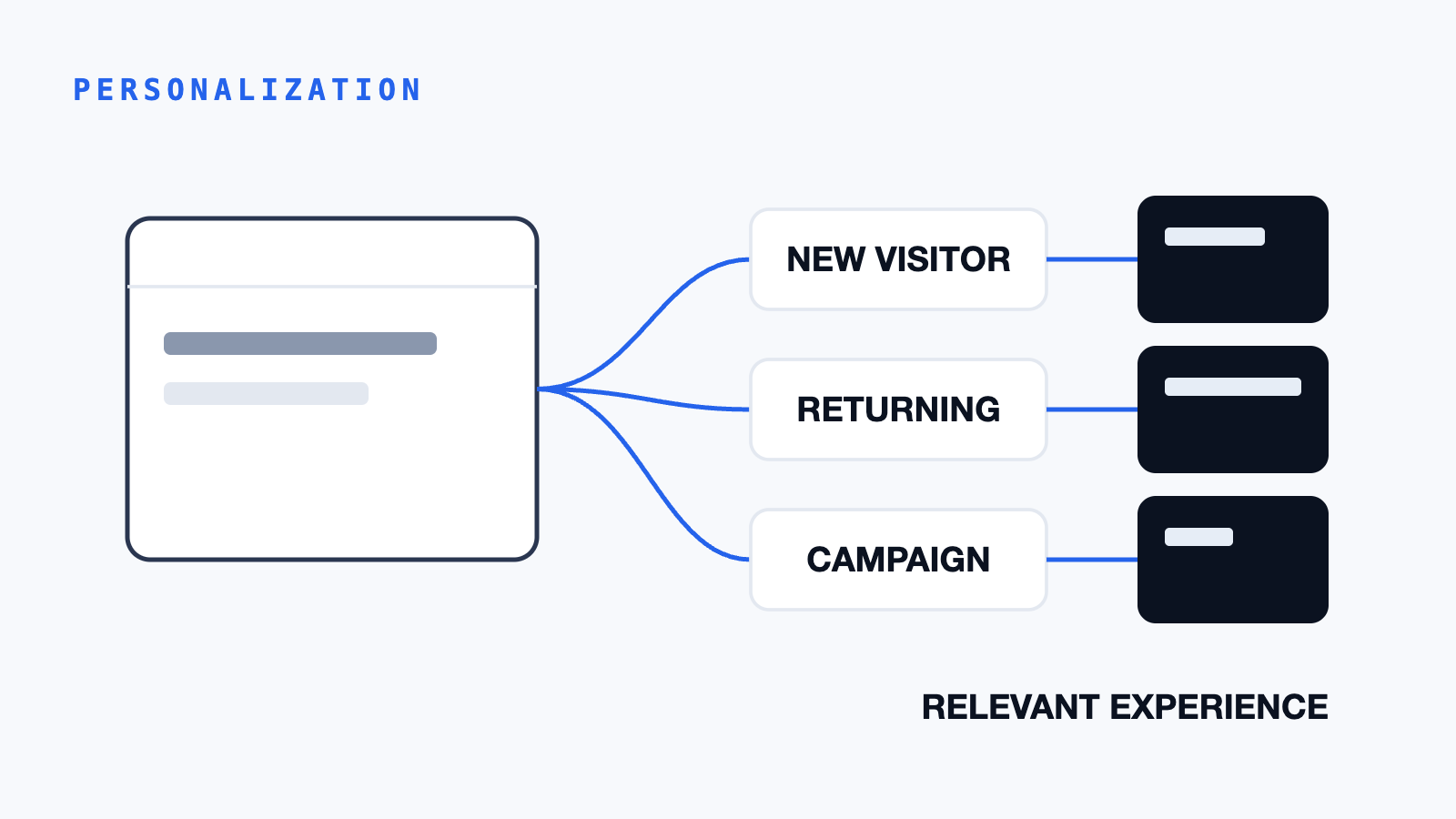
Personalization means showing a different, more relevant version of a page or message to different visitors, based on something real you know about them, not guessing, and not creepy tracking. That “something real” is usually simple: whether they’re new or returning, which page or ad brought them, their general location, or what they’ve already looked at on your site. The goal is relevance, not surveillance: a returning visitor sees something acknowledging that; a visitor from a specific ad sees a page that matches what the ad promised.
It’s not the same as customization, where a user changes their own experience (like choosing a theme). Personalization is the business deciding, based on evidence, what to show, and it should always be an improvement a visitor would welcome, not something that feels like being watched.
When is it worth doing?
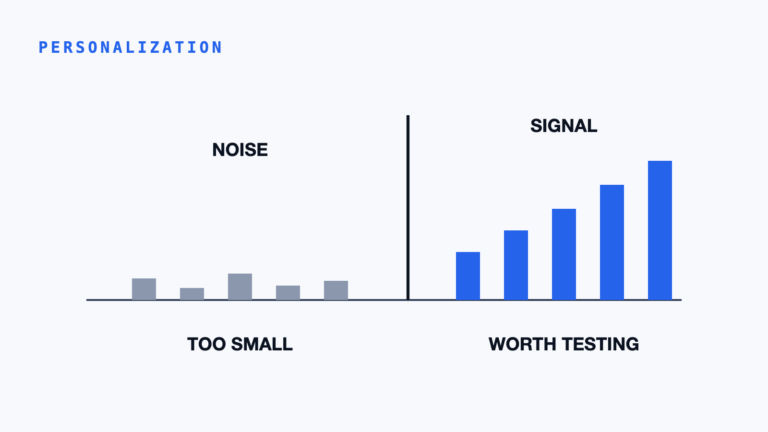
Personalization is worth it once you have enough traffic and enough visitor data for differences between segments to actually be meaningful, not before. If your site gets a handful of visitors a day, there usually isn’t enough of a pattern yet to justify segmenting them; the honest move is to build traffic and a real dataset first. Once there’s a real, observable difference in how different kinds of visitors behave, new versus returning, one traffic source versus another, that’s the signal personalization has something to work with. The full decision framework, including the honest case for waiting, is in when personalization pays off (and when it isn’t).
Alt text: Diagram showing personalization signals, new versus returning visitor, traffic source, on-site behavior, feeding a personalization layer added on top of a base page that already converts for everyone.
How do you start without buying anything new?
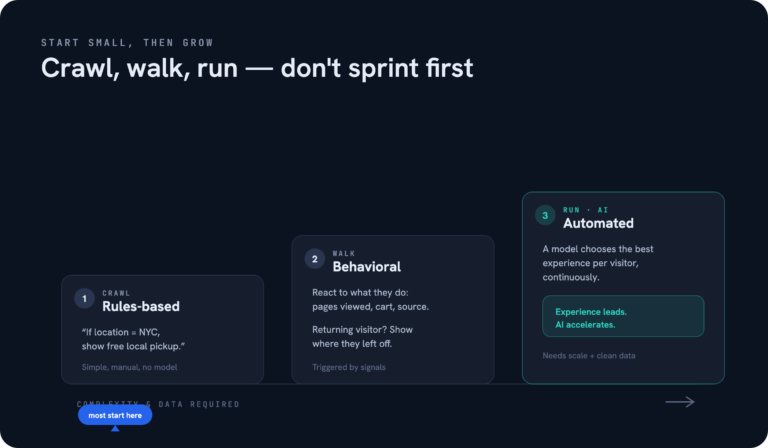
Most businesses already own more personalization capability than they’re using, inside analytics, email, and CMS tools they already pay for. Before evaluating a dedicated personalization platform, it’s worth checking what’s already available: segment-based email content, CMS features for showing/hiding blocks by visitor attribute, or basic on-site messaging tools. The full walkthrough of what to check and how to activate it is in personalization with tools you already have.
If your traffic and data eventually outgrow what a general-purpose tool can do, dedicated personalization platforms, Optimizely Personalization, Dynamic Yield, Monetate, become worth evaluating. That’s a later step, not a starting one.
A three-step starting checklist:
- Audit what you already own. Check your email platform, CMS, and analytics tool for a segmentation or conditional-content feature you’ve never turned on.
- Pick one real visitor difference. New versus returning is usually the simplest place to start, choose the difference that’s most tied to a business outcome, not the most technically interesting one.
- Confirm the base page already converts before you personalize it. If it doesn’t, personalization will only make an unconverting page differently unconverting.
How does this connect to the rest of your marketing?
Personalization works best as the layer that comes after you’ve already fixed the basics: it makes a good page better for different visitors; it can’t fix a page that doesn’t work for anyone. If a page is still losing most visitors regardless of who they are, that’s a conversion problem to solve first, see the plain-language CRO guide, before layering personalization on top of it. Personalization and conversion optimization compound together over time, both are part of the same discipline of getting more from the marketing, analytics, experimentation, personalization, commerce, customer-data, and AI technologies most businesses already own, not a separate initiative bolted on afterward.
Frequently Asked Questions
Is personalization the same as customization?
No. Customization is when a visitor changes their own experience, like choosing a theme or setting a preference. Personalization is the business deciding what to show based on evidence about the visitor, and it should always feel like a welcome improvement, never like being watched.
Do I need a customer data platform to personalize anything?
No. Most of the personalization worth doing at the start runs on simple, already-owned tools: email segmentation, CMS conditional content, or analytics-driven audiences. A CDP becomes worth evaluating only once rules-based personalization on those existing tools starts running out of room.
Will personalizing my site feel creepy to visitors?
Not if it’s built on the right signal. The goal is relevance a visitor would welcome, a returning visitor sees something acknowledging that, a visitor from a specific campaign sees a page that matches what brought them there, not evidence that you’re tracking them more closely than they expect.
What to do next
- Check whether your email platform, CMS, or analytics tool already has a segmentation or dynamic-content feature you’ve never turned on.
- Pick one clear visitor difference that matters to your business, new vs. returning is usually the simplest place to start, and ask what a more relevant experience would look like for each.
- If you’re not sure whether you have enough traffic or data yet to make this worthwhile, that’s worth an honest second opinion before investing time in it.
- For the pattern behind personalizing only where a real difference justifies it, see the Practitioner Lesson Personalization Should Improve a Decision, Not Just Prove the Technology Works.
Continue based on what you need next
- You want the tactics, not just the concept: website personalization that actually works and personalization with tools you already have cover the specific starting moves.
- You’re not sure it’s worth it yet: when personalization is worth it (and when it isn’t) is the honest decision framework.
Start with a free assessment: we’ll tell you plainly whether personalization is your next move, or whether something else should come first.
Alex’s Perspective
Of the 25+ marketing, analytics, experimentation, personalization, commerce, customer-data, and AI technologies I’ve worked hands-on with, personalization tools are consistently the most under-used relative to what they can already do. Most accounts have a segmentation feature sitting unused, not a missing capability. The gap is usually attention, not budget.
Where this fits
This is a Personalize pillar page: the entry point to relevance work, and it only pays off once Discover and Experiment have already fixed the basics a personalized experience would otherwise sit on top of.
Alex Harris leads AlexDesigns’ personalization practice, starting every engagement with this exact question: what real signal do you already have, and is there enough of it to act on? Published 2026-07-02, last reviewed 2026-07-18.