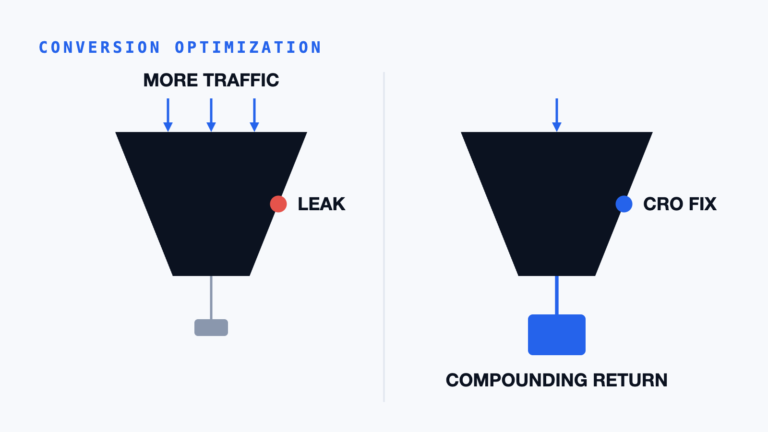
Start with diagnosis, not a redesign. Separate the possible causes (traffic, offer, page experience, trust, technical or form friction), rank them by evidence, and fix the highest-cost one first, treating conversion optimization as an ongoing practice rather than a one-time project.
Where Should a Conversion Diagnosis Actually Start Looking?
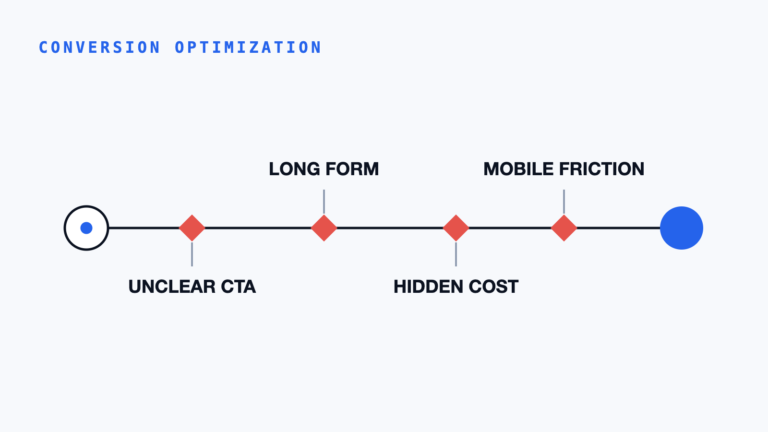
A flat conversion rate usually isn’t one problem, it’s several candidate problems tangled together. Traffic quality, offer clarity, page experience, trust signals, technical friction, form friction, checkout friction, and a weak sales handoff can all produce the exact same symptom: steady traffic, flat results. Naming those candidates honestly is the Discover stage of the work, and it comes before any Prioritize step that ranks them. Treating that symptom as one undifferentiated “the site isn’t converting” problem is how teams end up rebuilding a page section that was never actually the source of the drop-off. Quantitative data shows where visitors leave. Qualitative signal, recordings, surveys, direct feedback, shows why they left.
Skipping the “why” is one of the most common reasons a fix ships and the number doesn’t move, because the team solved a plausible problem instead of the real one.
How Do You Turn a List of Fixes Into an Ordered Roadmap?
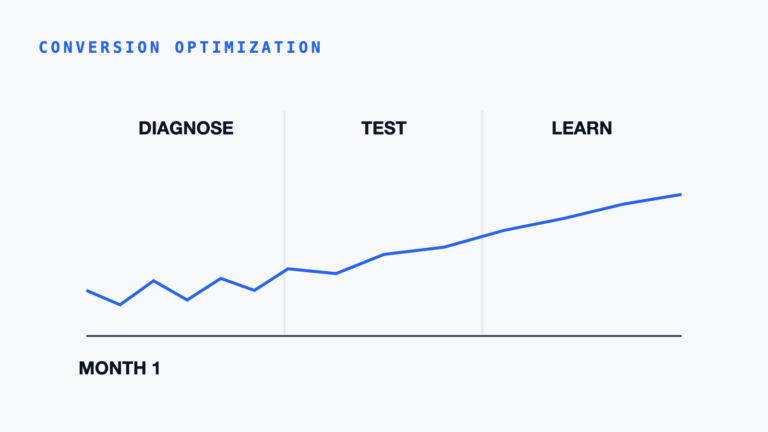
Once real causes are visible, the next job is ranking them, so the team argues about evidence instead of opinions. Every team has a different theory about what’s broken. That disagreement usually isn’t a personality problem, it’s a missing-diagnosis problem, addressed directly by the question of [“what is the difference between a CRO audit and a continuous optimization program”](/what-is-the-difference-between-a-cro-audit-and-a-continuous-optimization-program/). A ranked, evidence-backed roadmap replaces “I think it’s the headline” with a specific, ordered list of what’s costing the most, first. This is also where the discipline compounds. A one-off audit that gets read once and shelved is not the same as a continuous practice of finding, ranking, and fixing friction as new data keeps arriving. Businesses that treat this as a single redesign event tend to try it once and conclude it doesn’t work, not because the diagnosis was wrong, but because they stopped after one round instead of letting the improvement compound.
Where Do Strong Findings Lead After the Diagnosis Is Done?
A real diagnosis doesn’t stop at naming what’s wrong. Strong findings turn directly into testable hypotheses for experimentation, confirming whether a fix actually moves the number instead of assuming it will, and into segment-level signal for personalization, since different visitor segments often hit different friction and a single blended average can hide that split completely. None of this replaces reliable measurement. Every conclusion here depends on analytics that actually track the key funnel steps. Without that foundation, even a careful diagnosis is guessing with better vocabulary attached to it, and the roadmap built on top of it inherits the same weak ground it started from.
What to do next
If your team is debating a redesign without a diagnosis behind it, work through this short checklist before anyone touches a design file:
- List every step in the funnel where a visitor could realistically drop off.
- Pull the data for each step and rank the drop-offs by how much revenue each one costs.
- Add qualitative signal, recordings, direct feedback, session notes, to the top two or three.
- Turn the ranked list into one roadmap, then fix the highest-cost item first.
- Revisit the roadmap on a set cadence instead of treating this checklist as a one-time exercise.
Start a conversation about your conversion roadmap once you have that ranked list.
That’s the point where a real plan replaces a guess, and where the next round of findings starts feeding back into the same roadmap.