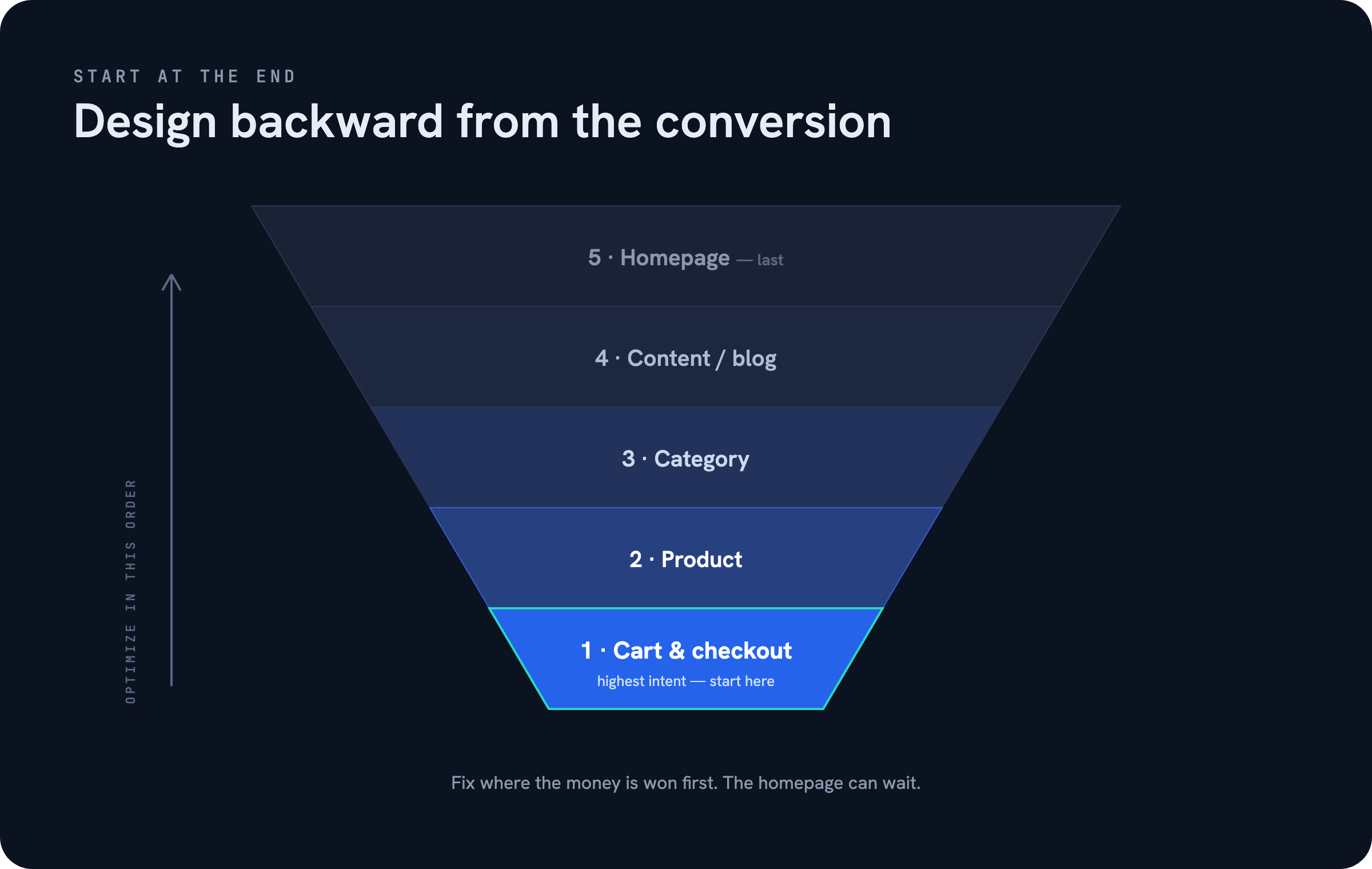
Whatever your website is for, it exists to do one job: move a visitor toward an action that matters to your business. That action is your conversion. It might be a completed purchase, a submitted form, a booked call, or a signed-up account. The mistake most teams make is designing the site from the homepage forward and hoping conversions fall out the other end. The stronger approach is to start at the end — the action you want — and work backward to it.
What does “start with the end in mind” actually mean?
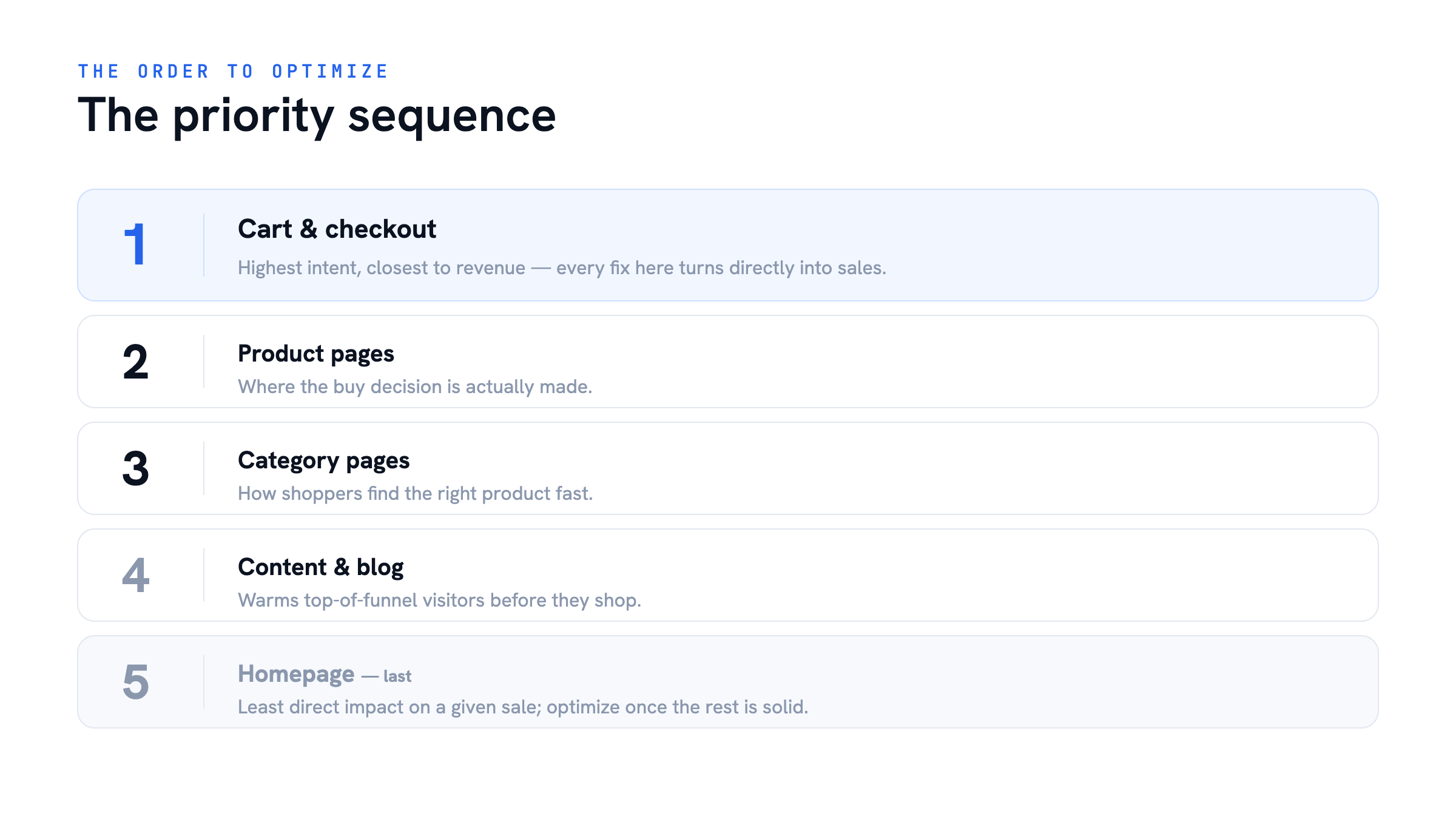
It means you fix the goal first, then design every step leading up to it in reverse order.
Take an ecommerce site. The end goal is revenue, so the place to start is the bottom of the funnel: the cart and checkout. That’s where intent is highest and where money is won or lost. If people who reached the cart are dropping out, no amount of homepage polish makes up for it. So you start there, reduce the friction, and get more of those ready-to-buy visitors through.
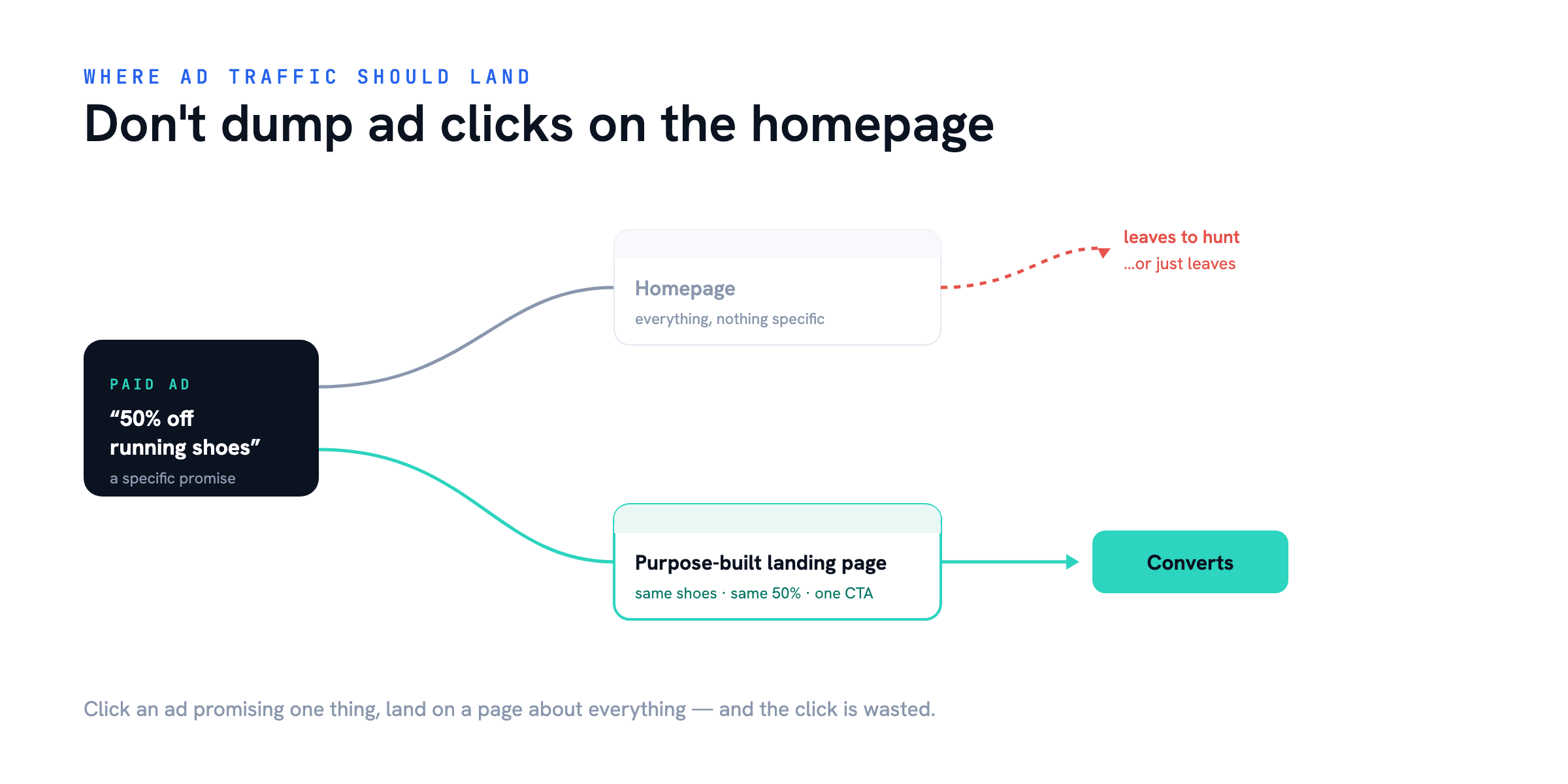
Only then do you move up the journey — the product page, the category page, the content and blog pages that feed the funnel — improving each step to carry more people forward. The homepage comes last. It matters for branding and for telling your story, but it’s rarely your most important conversion page. If you’re paying for ads that drop visitors onto the homepage instead of a page built to convert them, you’re likely paying for traffic that leaks straight back out.
Why work backward instead of front to back?
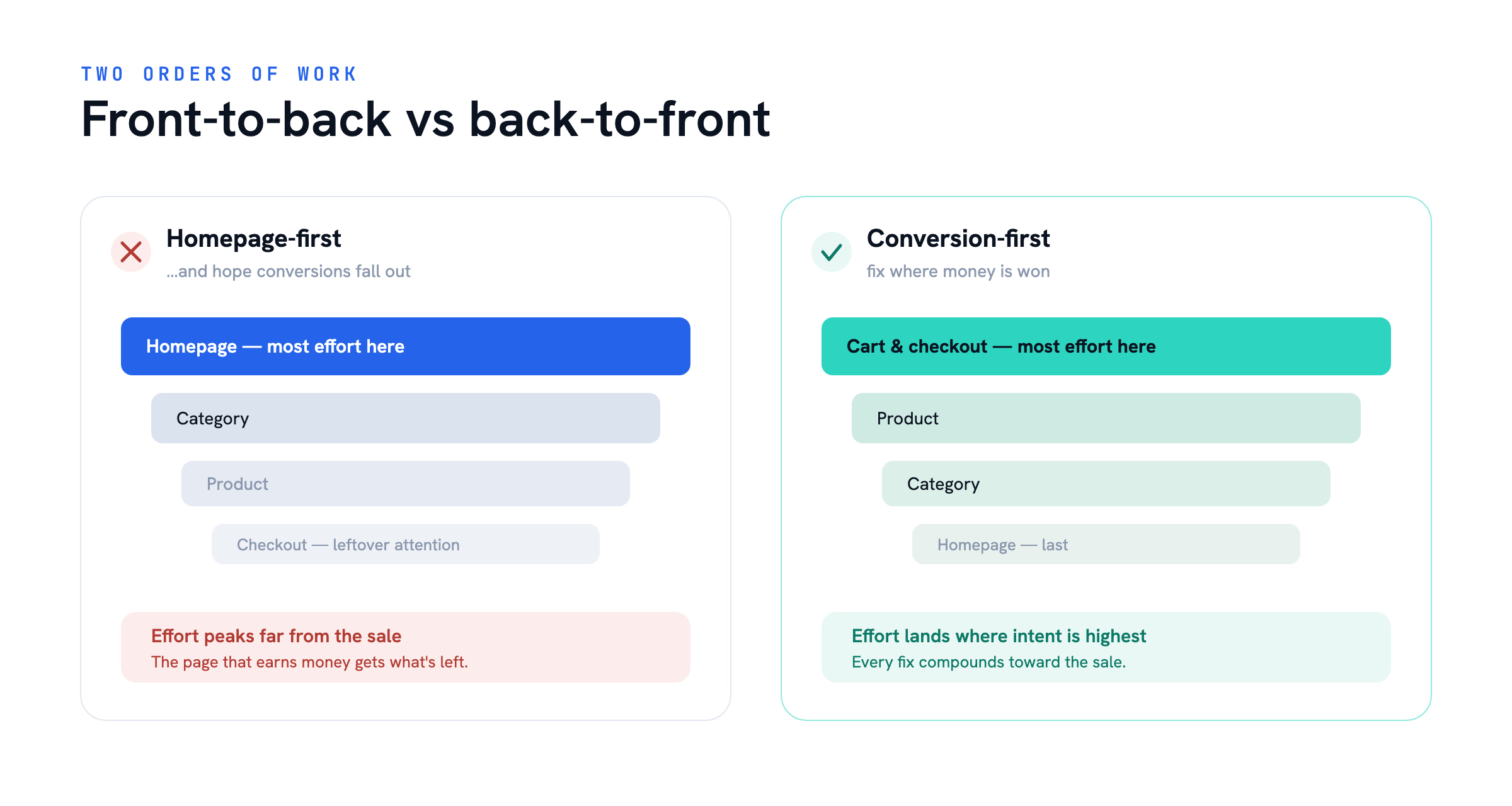
Because the end of the funnel is where your effort pays off fastest.
A visitor near the conversion has already decided they’re interested. Removing one obstacle in front of them recovers a sale you’d otherwise have lost outright. Improving the homepage, by contrast, helps people who are still deciding whether to engage at all — valuable, but slower to show up in revenue. When you start at the end, your earliest changes land on the people closest to buying, so you see the return sooner and learn what’s actually blocking conversions before you invest in everything upstream.
How do you design for the right device and the right moment?
Build the experience around how each person actually arrives — not around a single layout you hope covers everyone.
Most modern sites are responsive: the page detects the screen size and rearranges itself to fit a phone, tablet, or desktop. That’s the baseline, and it’s necessary. But fitting a screen isn’t the same as serving the person on it. Someone browsing on a phone during a commute has different needs and constraints than someone comparing options on a desktop with time to spare. The goal is to deliver the right experience to the right person on the right device at the right moment — not just a layout that technically reflows. That’s where personalization earns its place: tailoring what a visitor sees to their context so the path to the conversion feels obvious instead of generic.
Where do you start tomorrow?
Pick your single most valuable conversion and trace the steps a visitor takes to reach it, starting from the action and moving backward. Find the step with the steepest drop-off — the one closest to the goal — and fix that first. Then move up one step at a time. You’ll improve the pages that matter to revenue before you spend a day on the ones that mostly look nice.
Designing backward from the conversion is the difference between a site that looks finished and one that actually performs. If you want a clear read on where your funnel is leaking and which step to fix first, that’s exactly what a conversion review is for. [Book a consultation](/contact/) and we’ll take a look.