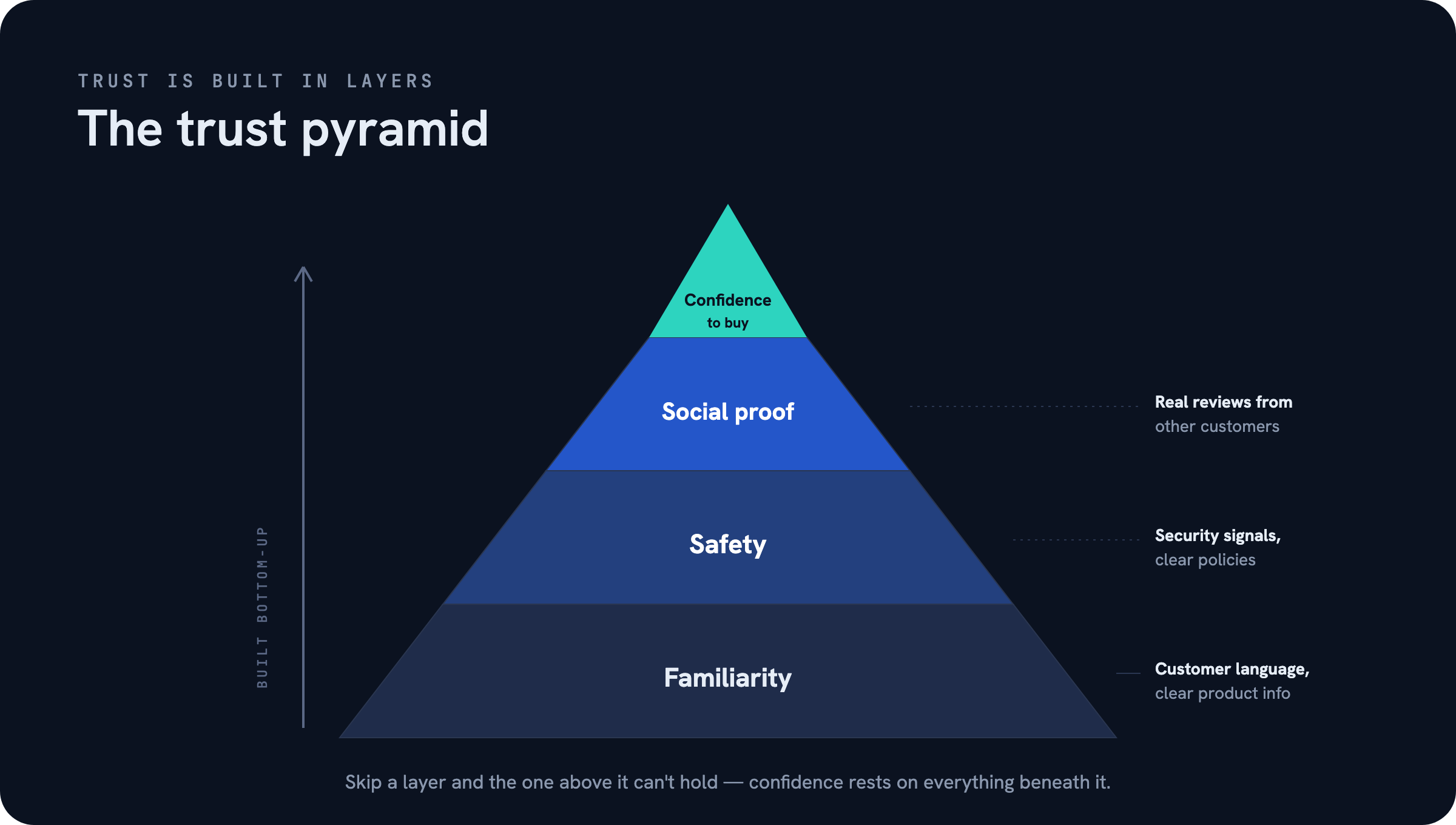
A shopper who doesn’t trust your site won’t buy from it — no matter how good your product or your price is. Some of them have been burned before by an unsecured site or a business that never delivered, and they carry that caution to every new store they visit. Security concerns alone push a meaningful share of people to abandon checkout. The good news is that trust is something you can deliberately build, and most of the work is simply making the right information easy to find at the moment it matters.
Why do shoppers hesitate to buy from your site?
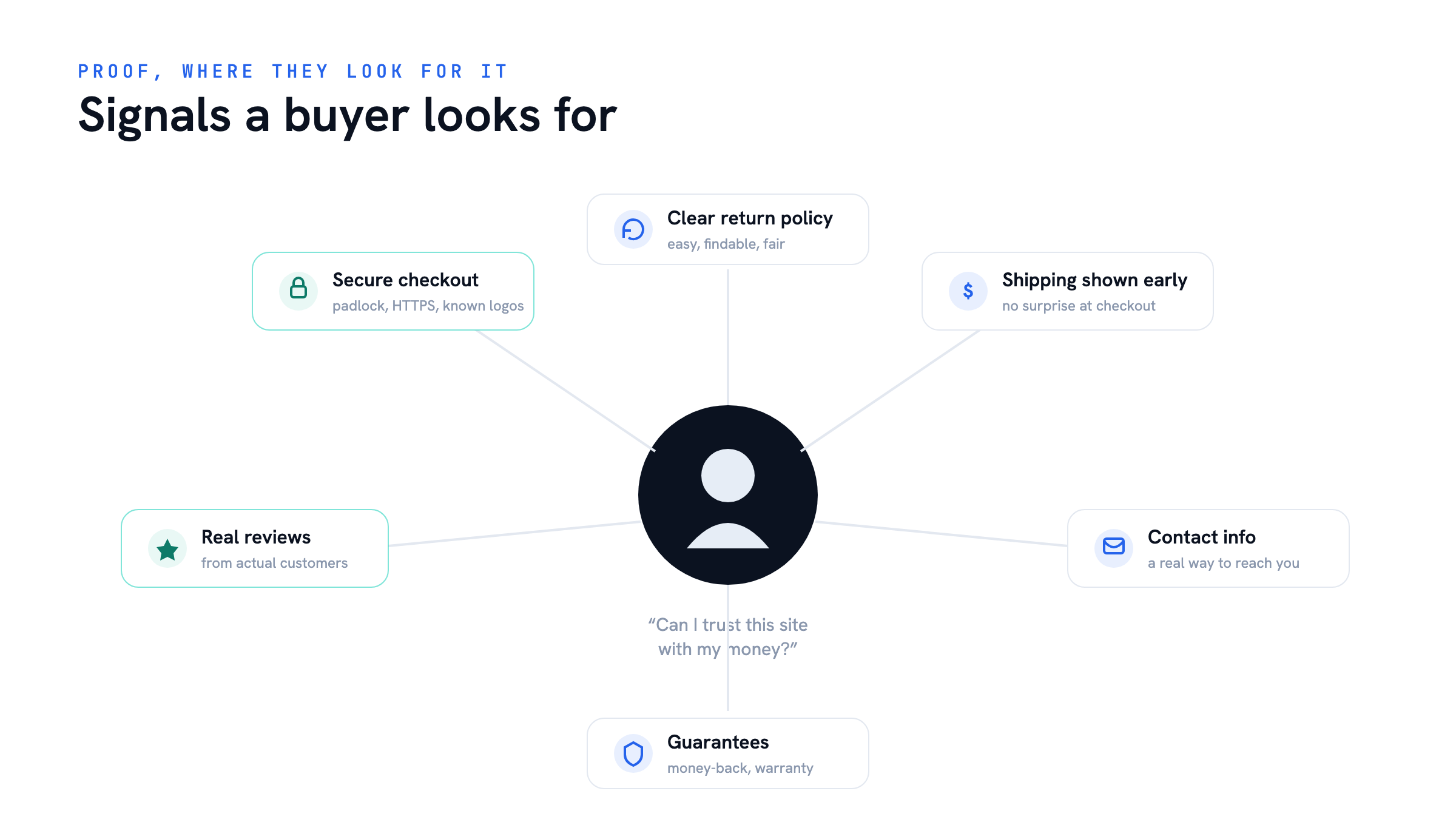
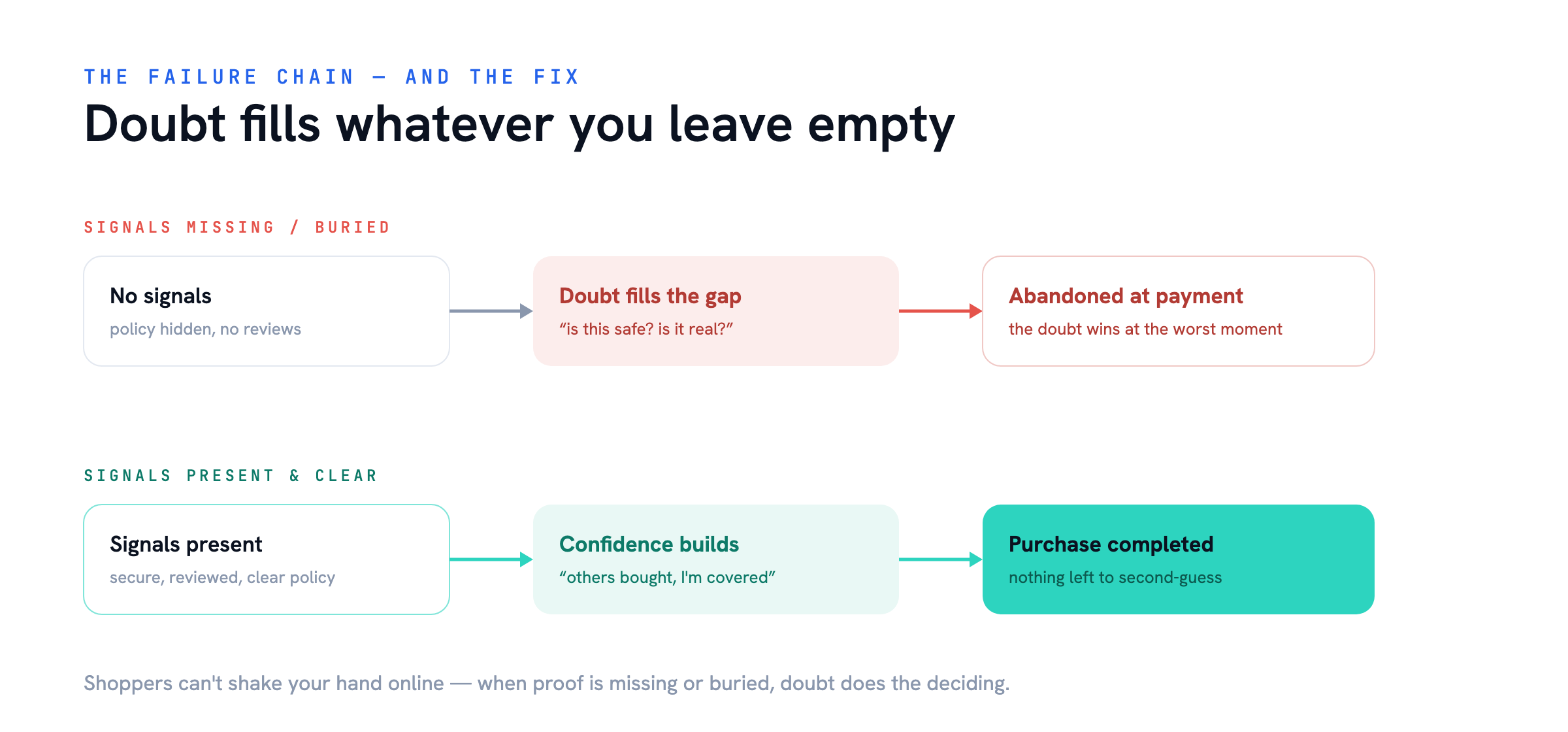
Online, a buyer can’t shake your hand, walk your store, or read your face. They’re handing over payment details to a company they may have found minutes ago. So they look for signals — proof that you’re real, that the transaction is safe, and that other people have bought from you and been fine. When those signals are missing or buried, doubt fills the gap, and doubt at the point of payment usually ends in an abandoned cart.
The fix isn’t to oversell. It’s to be transparent and forthright with the information that actually matters to your customers, in the places they’ll look for it.
What information do your customers actually care about?
Don’t guess. Use polls, surveys, and live chat to talk to real shoppers and learn their biggest concerns and questions. You’ll often find the same few worries come up again and again — shipping cost, return policy, whether the size runs small, whether their card details are safe.
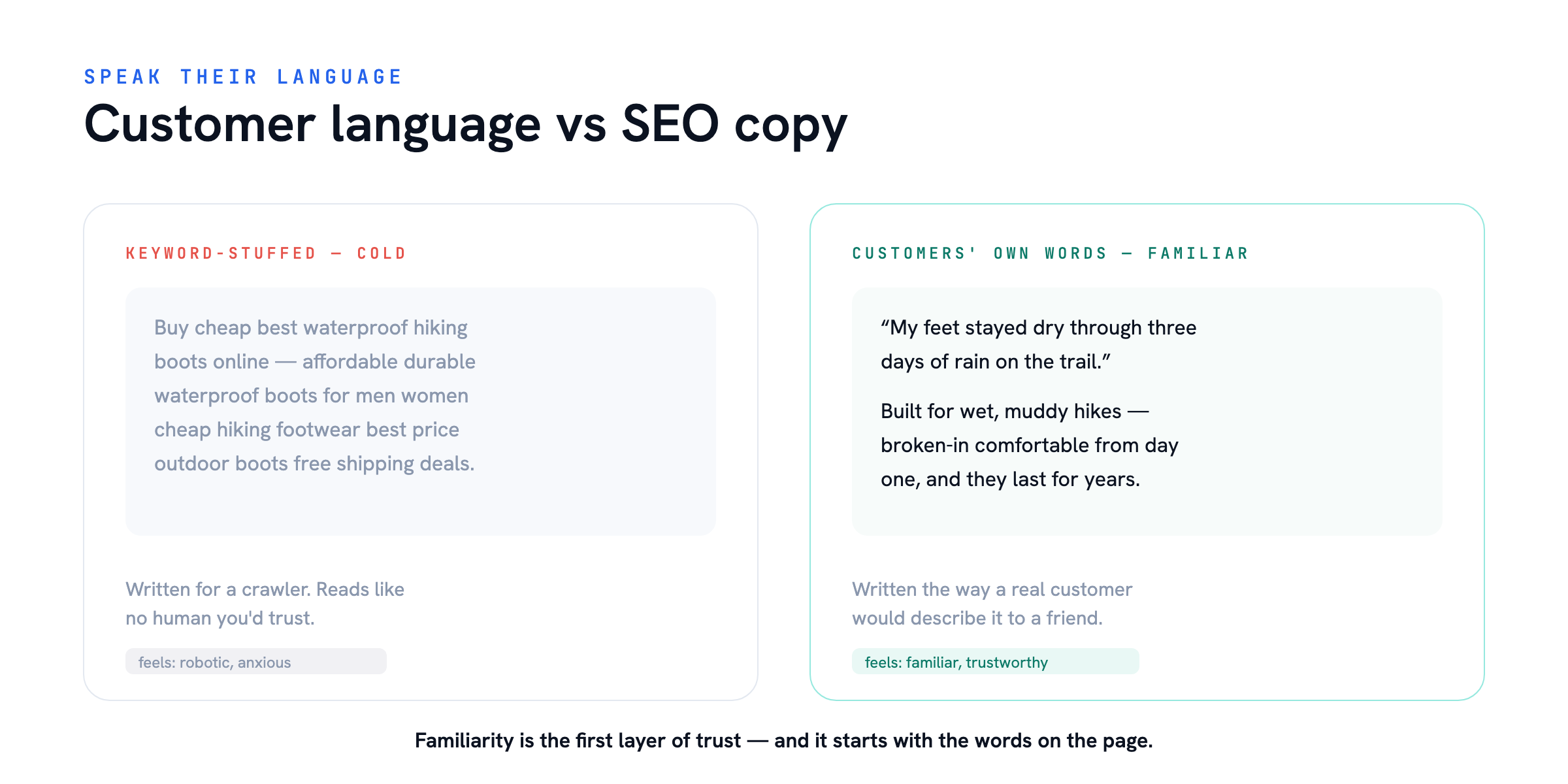
Pay attention to the words they use, too. Listen to how customers describe your products when they talk to you, and use that same language on your site. It’s tempting to write your pages in SEO language stuffed with keywords — don’t. Describing your products the way your customers describe them creates a sense of familiarity, and familiarity is the first layer of trust.
How do you build trust into the page itself?
Make it easy to reach you, and give people more than one way to do it. A visible phone number, email, and chat option all quietly signal that there’s a real business behind the site.
Make the experience demonstrably secure, and show it. Display the security and payment signals that tell shoppers their details are safe before you ask them to type those details in.
Include reviews from past buyers. A track record of real, satisfied customers does more to reassure a hesitant shopper than any claim you make about yourself.
And — this is the part most sites get wrong — make all of it easy to find. Never make a visitor go out of their way to learn they can trust you. Put your return policy on the product page itself, not three clicks away. Surface shipping details before checkout, not after. A “shop with confidence” summary near the buy button, pulling together your shipping policy, return policy, and security information in one place, removes doubt at exactly the moment it would otherwise cost you the sale.
The principle underneath all of this is simple: trust isn’t a badge you bolt on at the end. It’s the result of answering a shopper’s unspoken questions before they have to ask them — and answering them right where the decision gets made.
Trust signals are some of the easiest conversion gains to capture, because the information your shoppers want usually already exists somewhere on your site — it’s just in the wrong place. If you’re not sure where doubt is quietly costing you sales, that’s exactly what a conversion review is for. [Book a consultation](/contact/) and we’ll take a look.