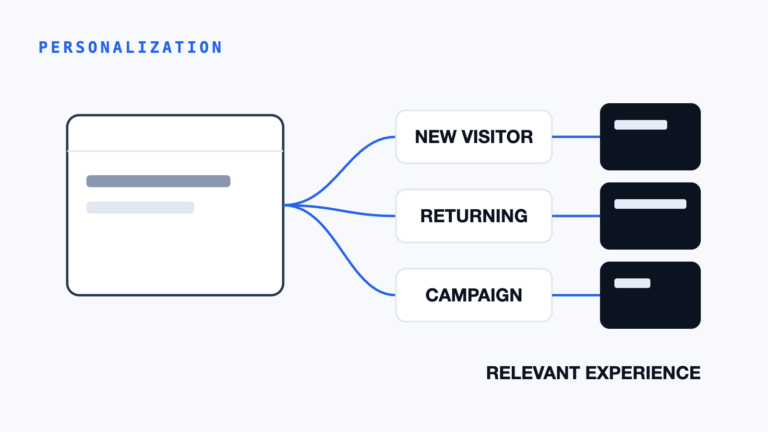
Showing every visitor the same page treats a first-time browser and a ready-to-buy customer exactly alike. Personalization — adapting what someone sees based on what you already know about them — is how you stop doing that. The idea is simple: the right content, for the right person, at the moment they’re paying attention, tends to convert better than one experience built for everyone.
The trouble is that most teams reach for complex, automated personalization before they’ve laid any groundwork. They buy the tools, switch on a few rules, and hope for lift. Personalization that actually moves the numbers works the other way around: start small, prove each idea, and grow it over time. Here’s how to do that without guessing.
Where should you start with personalization?
Start where you already have data and a clear reason to act on it. You don’t need a full customer data platform or a machine-learning model to begin — you need one segment, one hypothesis, and a way to measure the result.
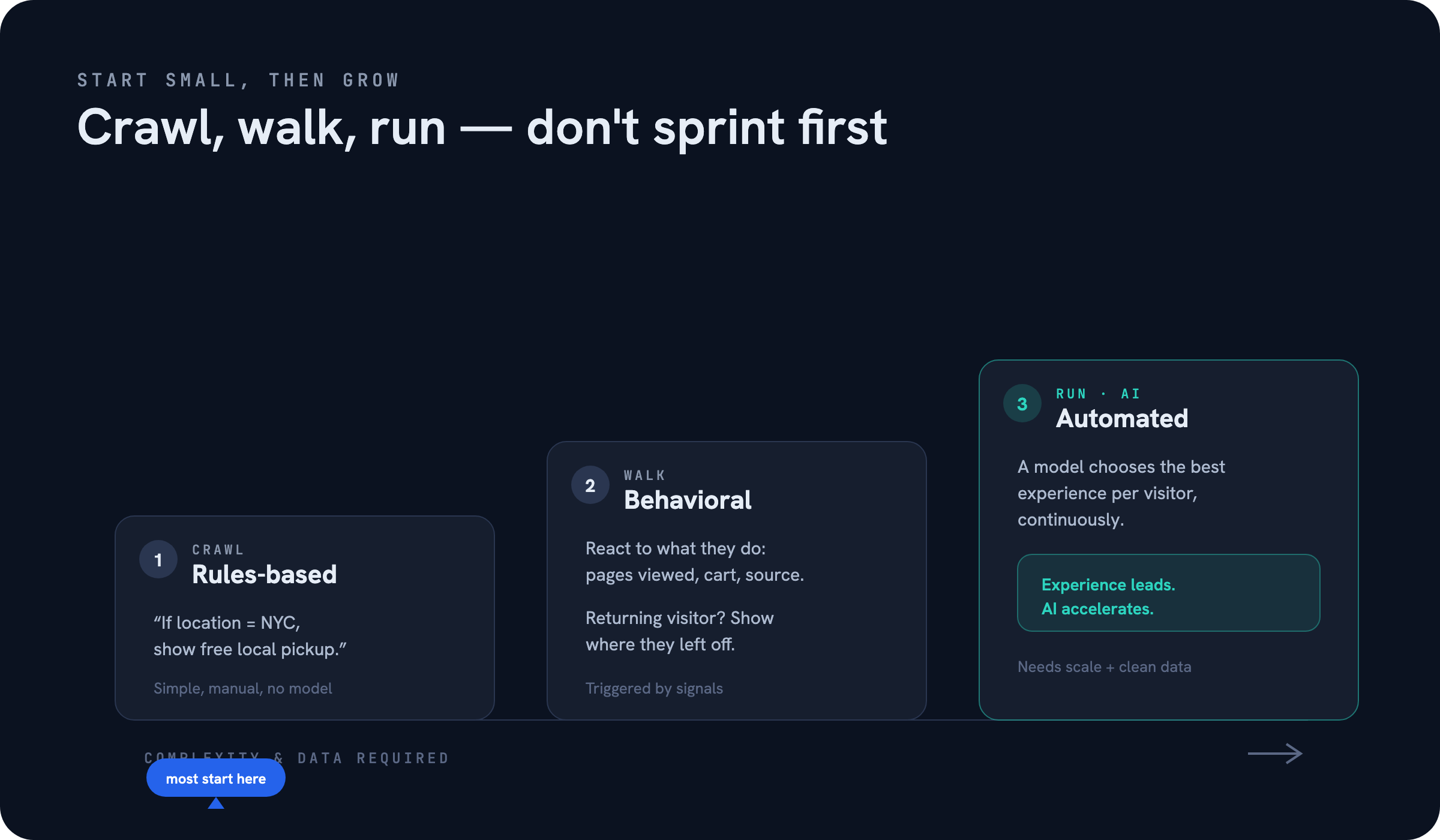
Think of it as a spectrum. At the simplest end is rules-based personalization: “if a visitor is in this location, show this.” Further along is automated personalization, where the system decides what to show based on behavior in real time. Almost no one should start at the automated end. Crawl with simple rules you can reason about, confirm they help, then walk and run as your confidence and data grow.
Why should you test every personalization idea?
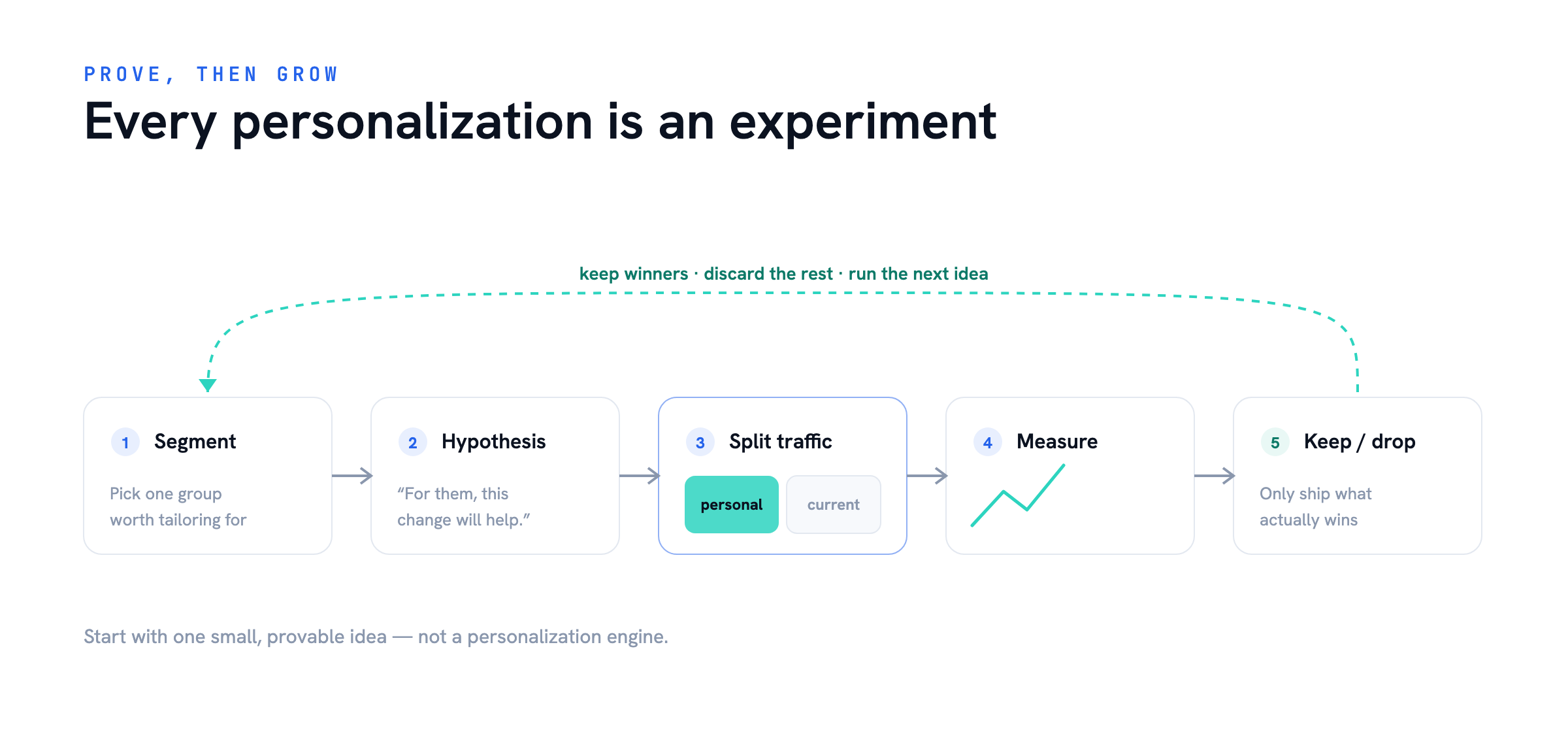
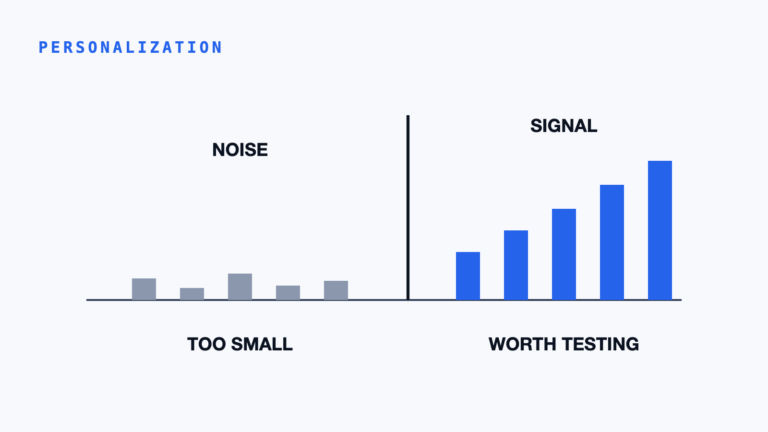
Because every personalization idea is a guess until the data settles it — including the good ones. A change that feels obviously helpful can do nothing, or quietly hurt. The only way to know is to measure it against the experience you have today.
The practical move is to treat each idea as an experiment. Split your traffic — show the personalized version to one group and your existing version to another — and compare how each performs against a goal you set in advance. If the personalized experience wins, keep it and build on it. If it doesn’t, you’ve spent a small test instead of a full rollout to learn that. Then use what you saw to shape the next experiment. Personalization done well is a loop of test, measure, and refine, not a one-time launch.
Which personalization tactics are worth trying first?
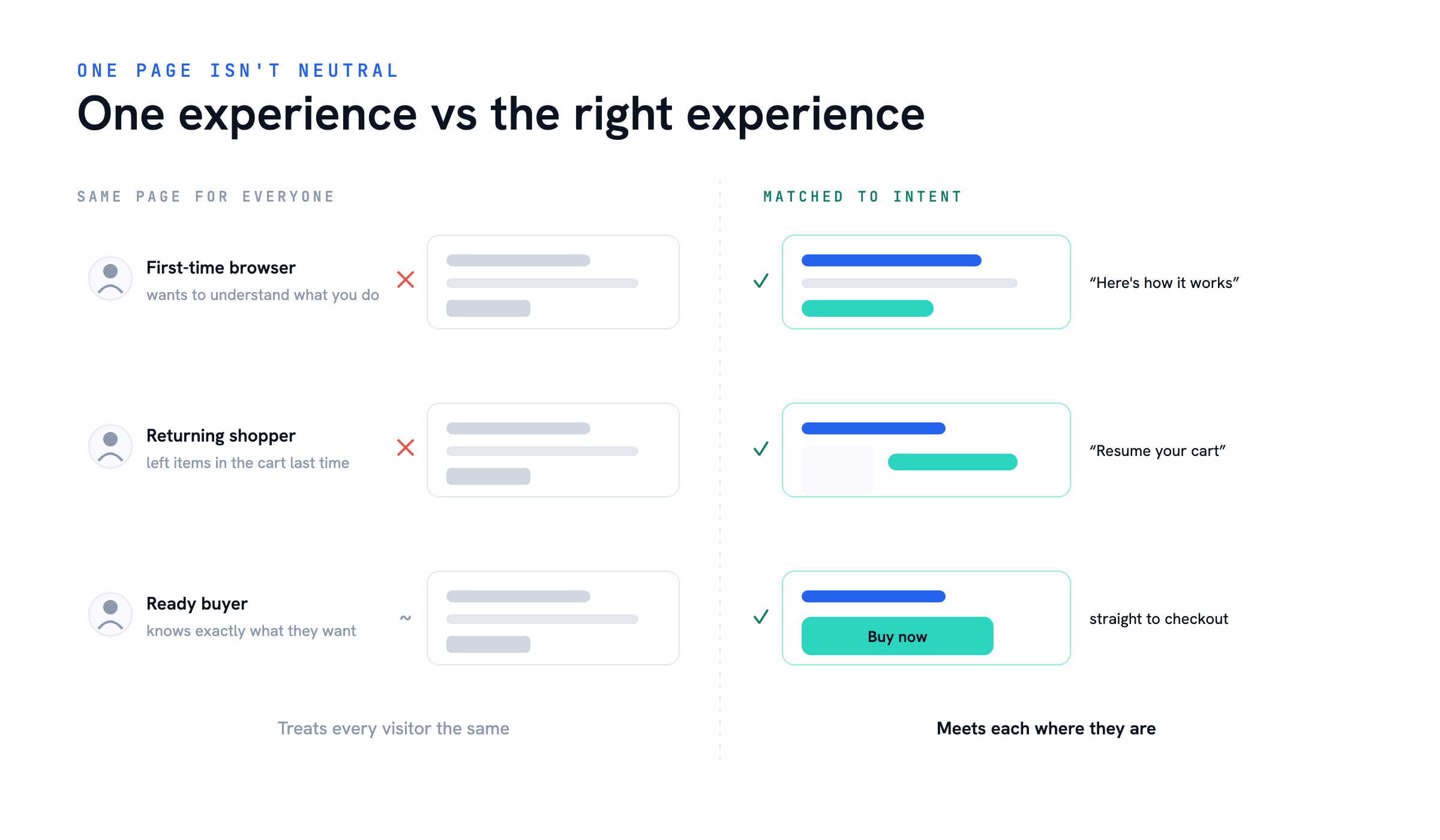
Two reliably earn their keep early: recommendations and matched landing pages.
Product and content recommendations use what you know about a visitor — what they’ve browsed, searched, or bought — to surface things they’re more likely to want. On an ecommerce site that means relevant products and timely reminders of items someone looked at but didn’t buy. On a content site it means pointing readers toward the next thing that fits their interest. It’s one of the lowest-effort ways to make an experience feel built for the person in front of it.
Matched landing pages close the gap between an ad or email and the page it sends people to. When the headline, image, and offer on the page reflect the message that brought someone there, the experience feels coherent and people are more likely to stay and act. When the page is generic, the visitor has to do the work of connecting the two — and many won’t. Personalizing landing pages to the campaign driving the traffic is a straightforward, high-leverage place to begin.
What does this look like in practice?
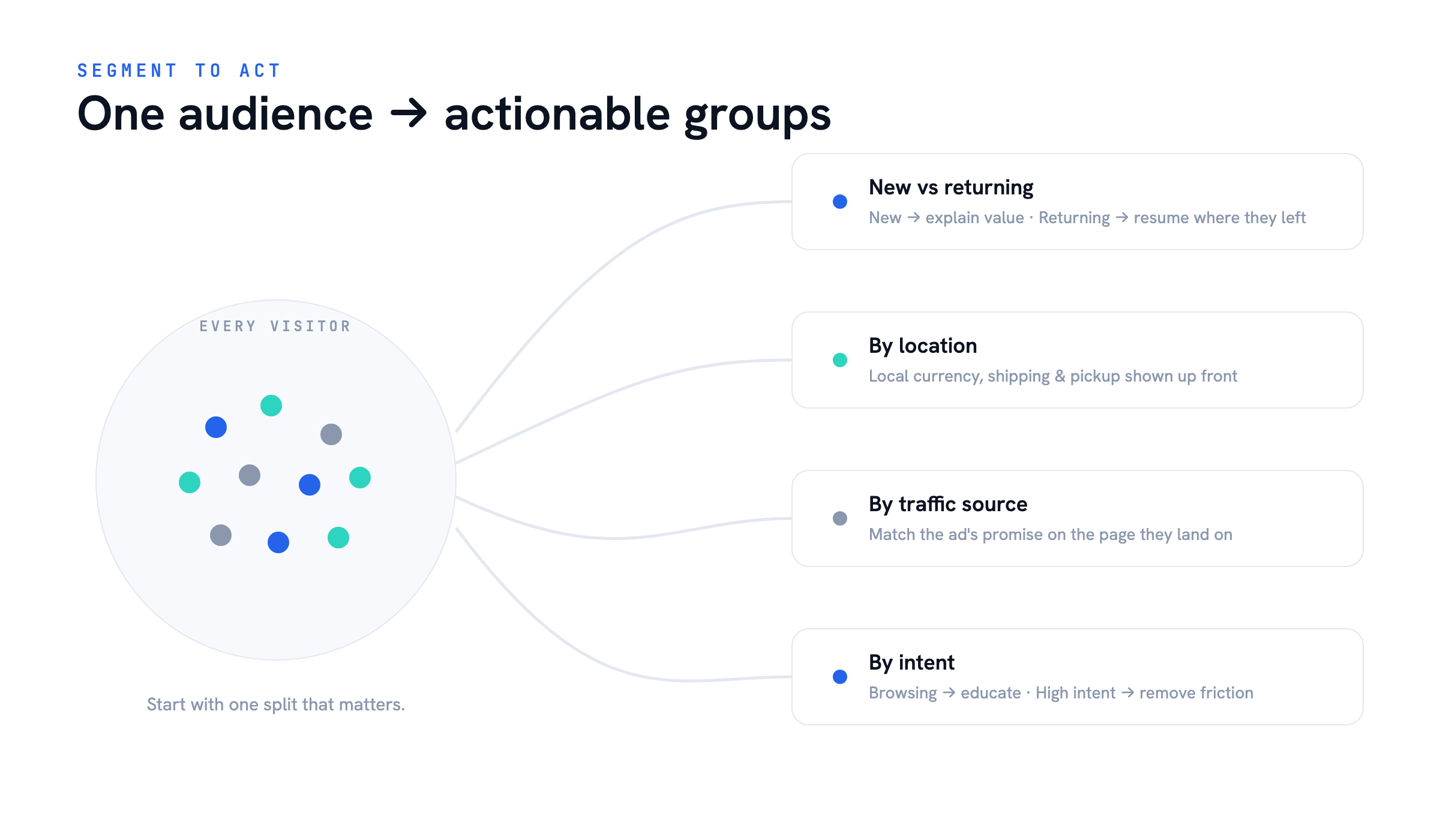
Have a plan, follow a roadmap, and let data make the decisions. You don’t have to assume an idea will work, and you shouldn’t — testing and analytics exist precisely so you don’t have to guess. Start with one segment and one clear hypothesis, prove it, and let each result fund the next step. That’s the difference between personalization that compounds and personalization that stalls after the first ambitious launch. For more, see a CRO foundation personalization builds on and converting the visitors you already have.
If you’re not sure where personalization would pay off first on your site — or whether the tools you already own can deliver it — that’s exactly what a conversion review is for. Find the first audience difference worth personalizing and we’ll map out where to start.