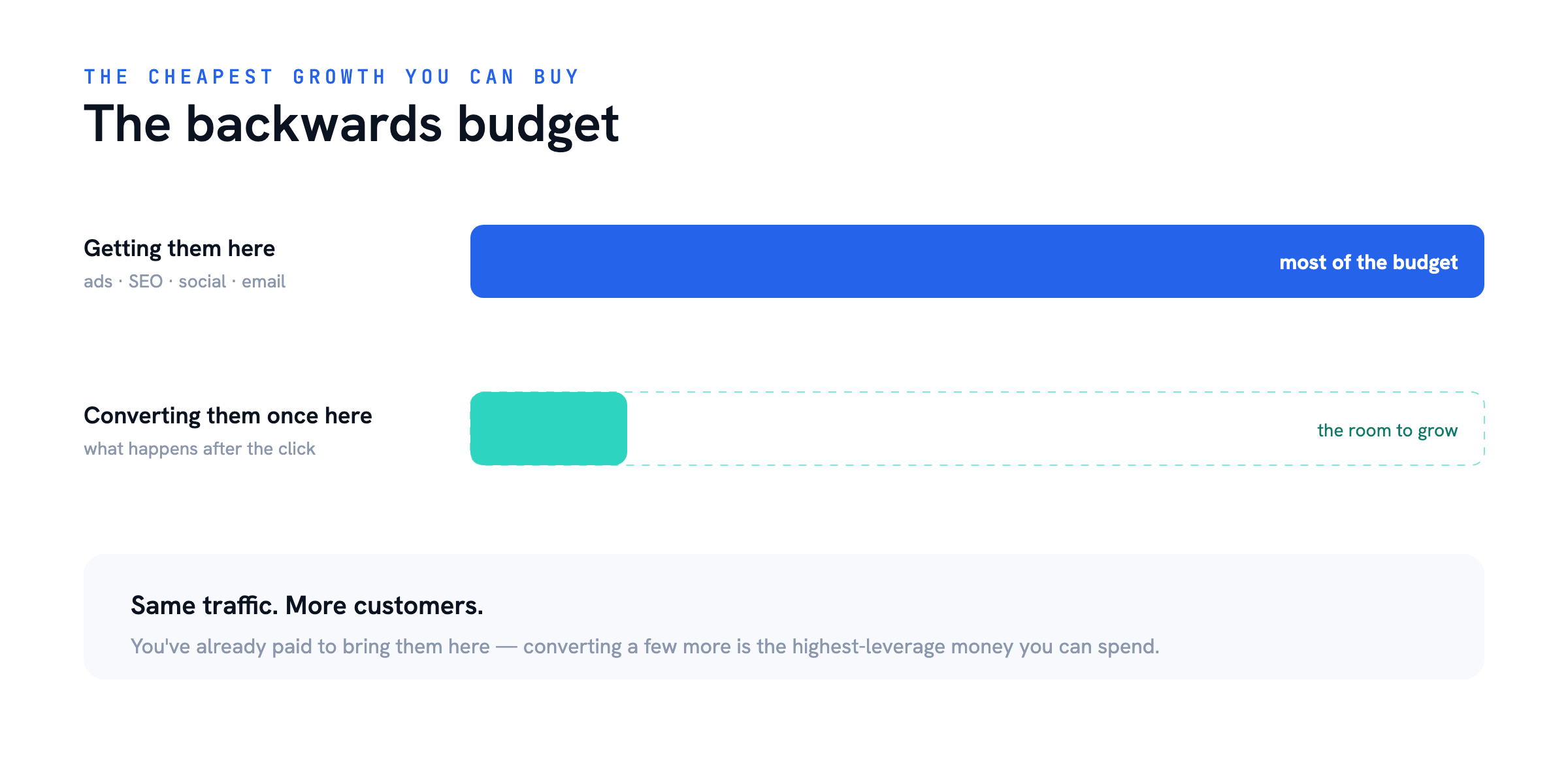
Most businesses spend almost all of their effort getting people to the website and almost none on what happens once they arrive. That’s backwards. You’re already paying for the traffic you have — through ads, content, email, and time. The cheapest growth you can buy is converting more of the visitors who are already showing up. That work has a name: conversion rate optimization, or CRO — systematically improving the percentage of visitors who take the action you want.
When is the right time to start optimizing?
Now, and ideally during a quieter stretch of your year rather than your busiest.
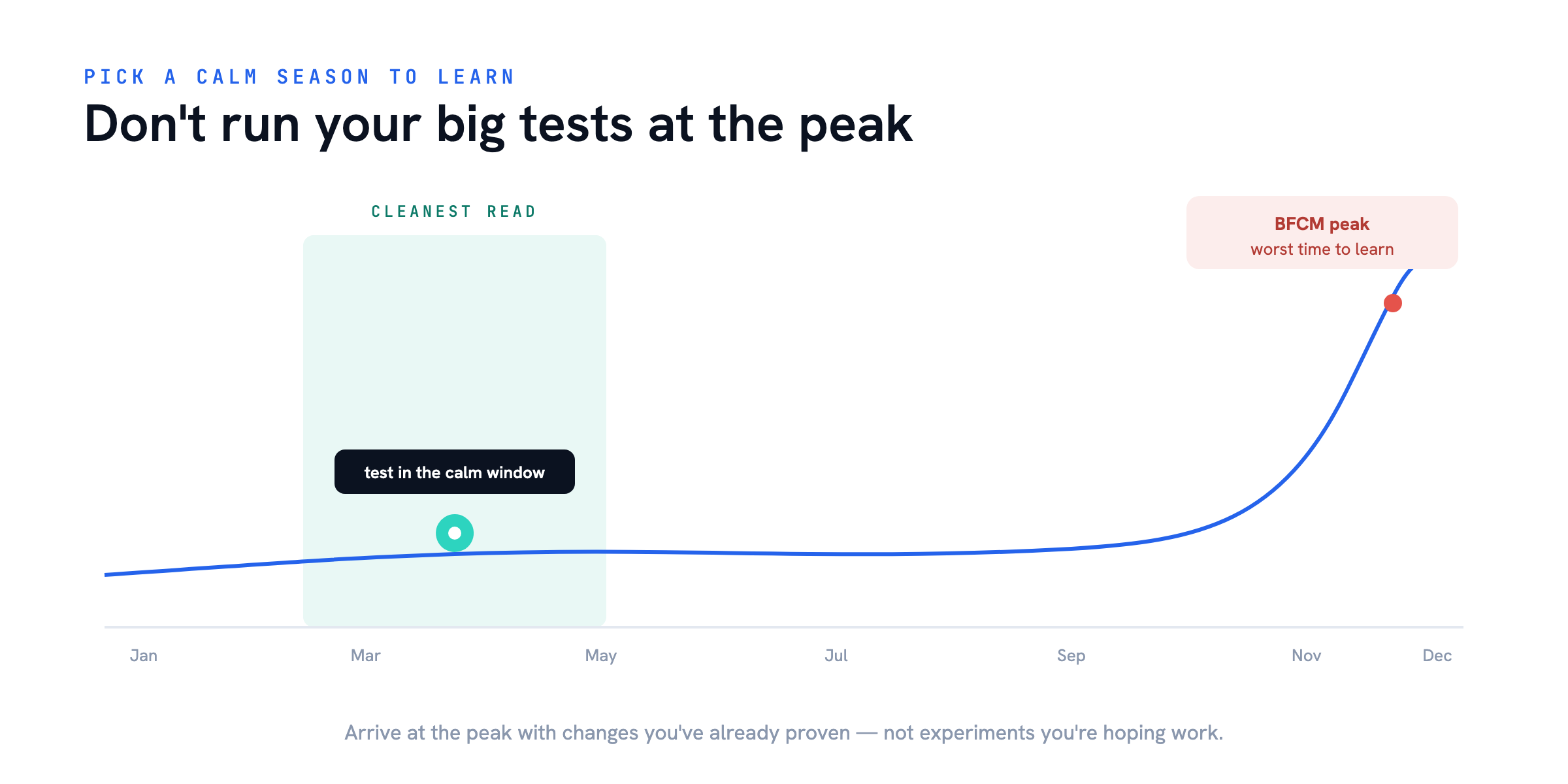
Most sites have seasonality. The temptation is to wait for your peak — a big sale, the holidays, a launch — because that’s when the traffic and revenue are highest. But peak periods are the worst time to learn. Shoppers behave differently when they’re buying gifts or chasing a deadline, and a test you run then tells you how people act under pressure, not how your everyday visitor thinks. A calmer period gives you a cleaner read on your typical customer. Improve the site while the stakes are lower, and you walk into your peak with changes you’ve already proven work — instead of guessing when it counts most.
What should you actually test?
Start where the money moves, not where the design itches.
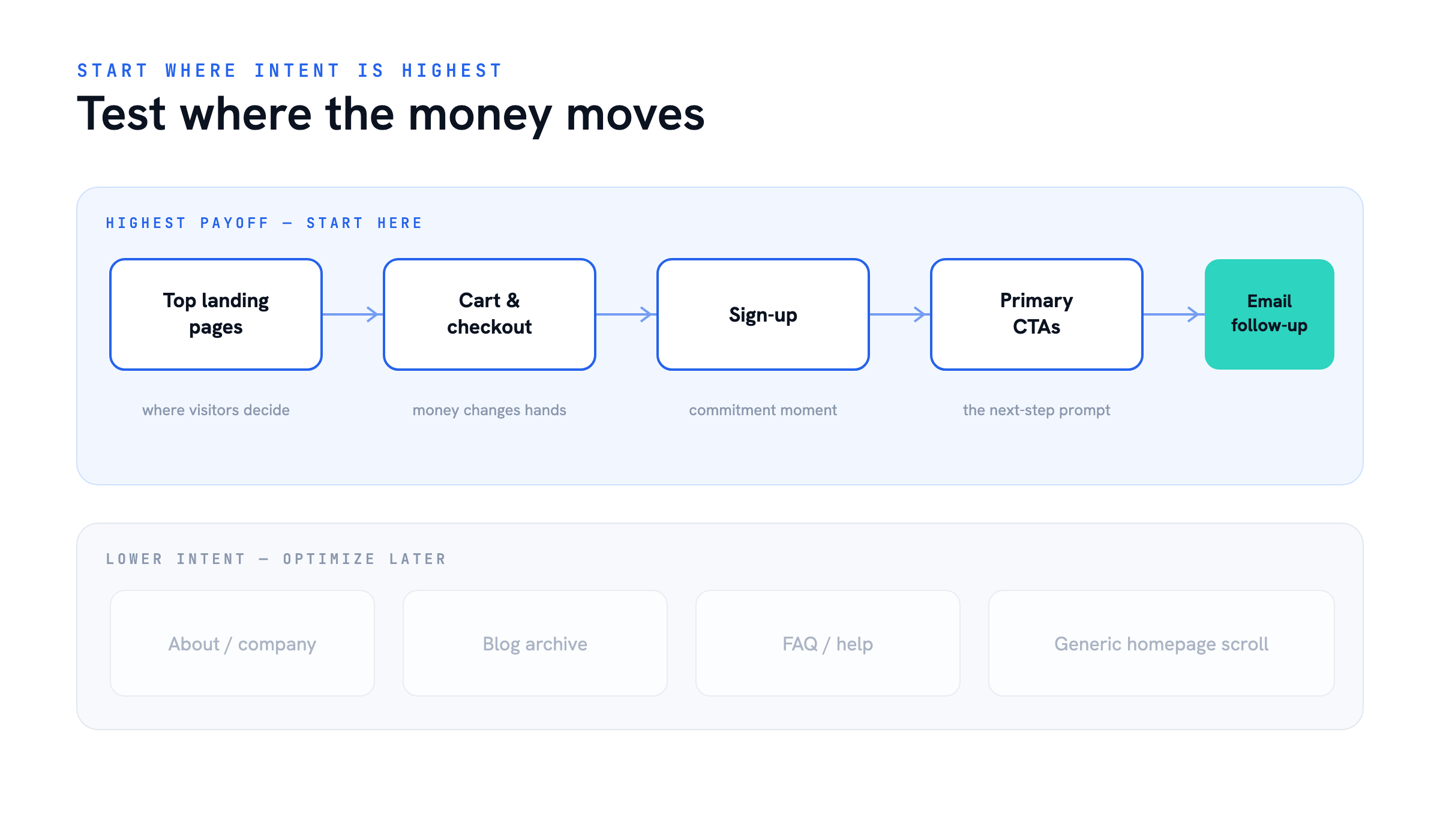
Your checkout or signup flow, your highest-traffic landing pages, your email follow-up, and your main calls to action are usually where small changes pay off fastest, because that’s where intent is highest and friction does the most damage. Run real A/B tests — show one version to half your visitors and another to the rest — so you’re comparing outcomes, not opinions. The point isn’t to chase a hunch about a button color. It’s to remove the specific friction that’s quietly costing you customers who already wanted to buy.
How do you know what’s actually stopping people?
Ask the people who didn’t convert, and watch the people who did.
Analytics tell you where visitors drop off; they rarely tell you why. That part comes from talking to customers. Reach out to recent buyers and ask what nearly stopped them. Run a few moderated sessions where you watch someone use your site and narrate where they get confused. Look at the people who left without buying and find out what they couldn’t find, didn’t trust, or didn’t understand. These insights are what turn random tweaks into a real list of test ideas worth running — each one grounded in an actual barrier, not a guess.
How does this add up over time?
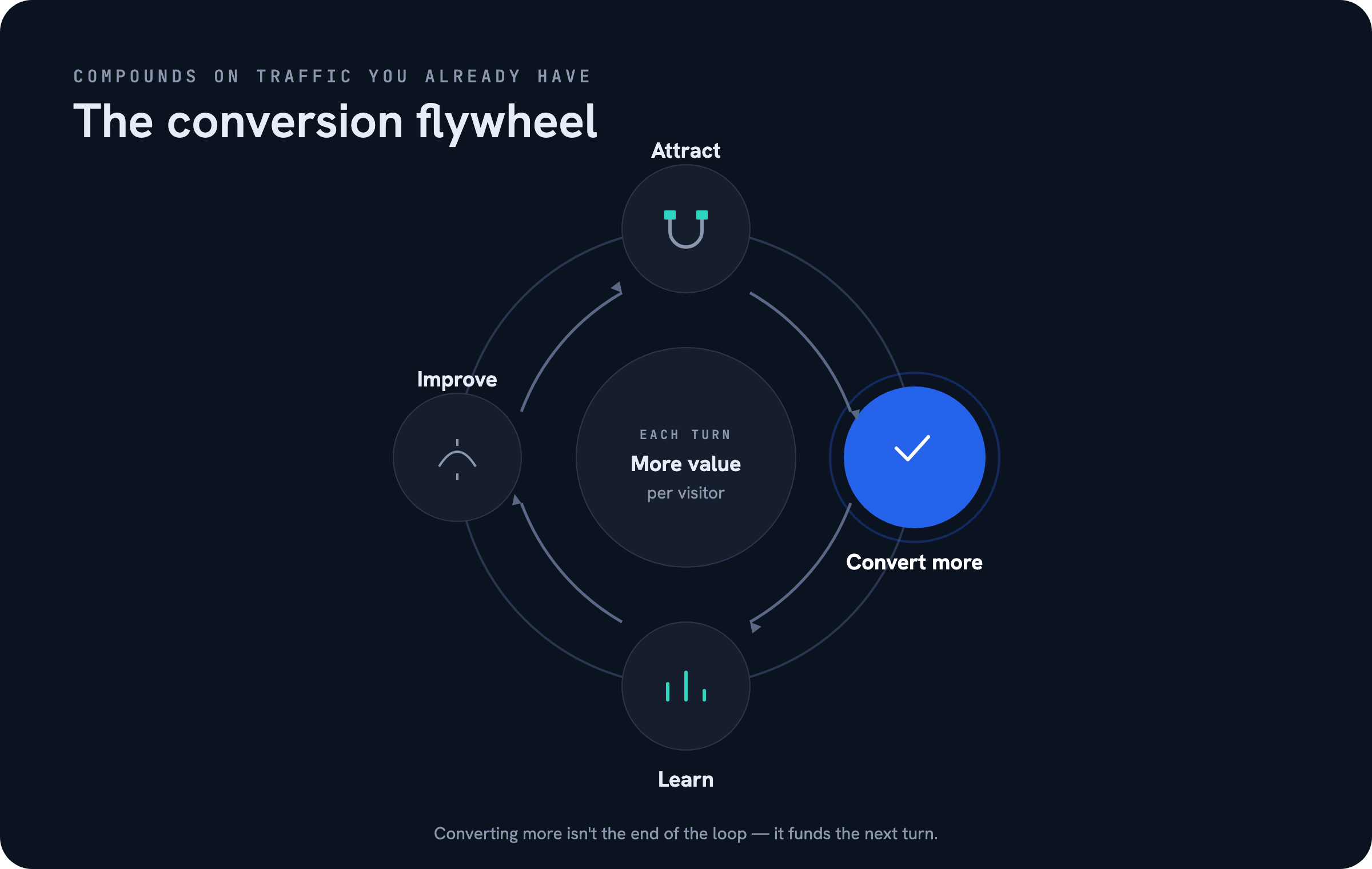
Optimization compounds. Each test that wins gets built into the site, and the next test starts from that improved baseline. Spend a few months getting to know your customers and running disciplined tests, and by the time your peak season arrives you’re not hoping the site converts — you have a version you’ve measured, improved, and trust. That’s the difference between a website you redesign on a hunch every couple of years and one that gets quietly, measurably better all the time.
If you’re not sure where your site is leaking customers — or which test to run first — that’s exactly what a conversion review is for. [Book a consultation](/contact/) and we’ll take a look.