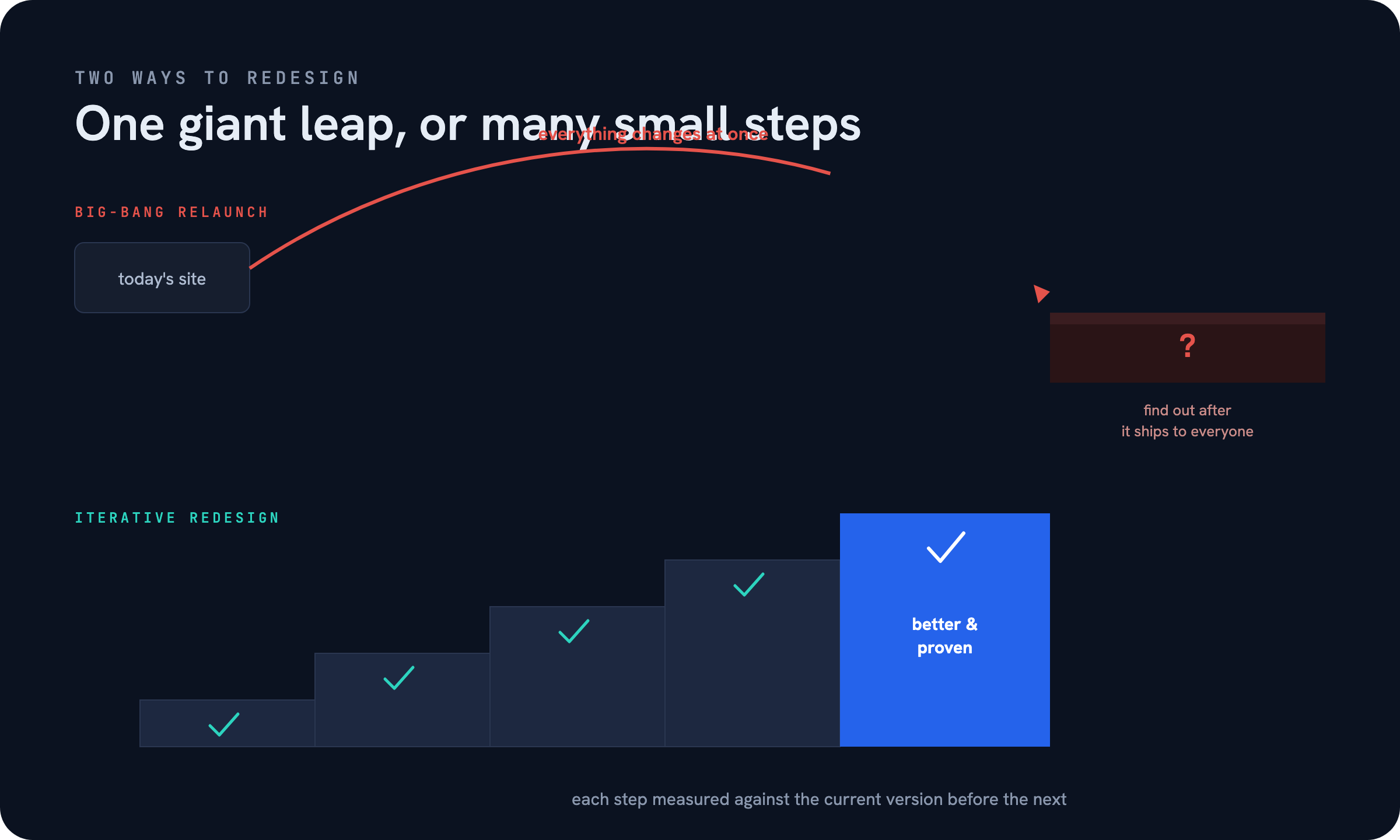
A new design that looks great is not the same as a new design that makes more money. Plenty of companies have hired excellent designers, launched a beautiful new site, and watched conversions fall — because looking better and performing better are different things, and a full redesign tests both at once with no way to tell which moved the needle.
There’s a calmer way to do this. Instead of replacing your whole site in one launch, you change it in small, validated steps — measuring each change against the old version before you commit to it. That’s an iterative redesign, and for most businesses it’s the lower-risk, higher-return path.
What is an iterative website redesign?
An iterative redesign means improving your site through a series of small, deliberate changes that you test before you keep. Rather than rebuilding everything and flipping a switch, you run an A/B test — showing some visitors the new version and some the current one — and you keep the change only when the data shows it actually performs better.
The word that matters is validate. A big-bang redesign asks everyone to trust that the new site is better. An iterative redesign proves it, one change at a time, with your real customers and your real traffic.
Why is a big-bang redesign so risky?
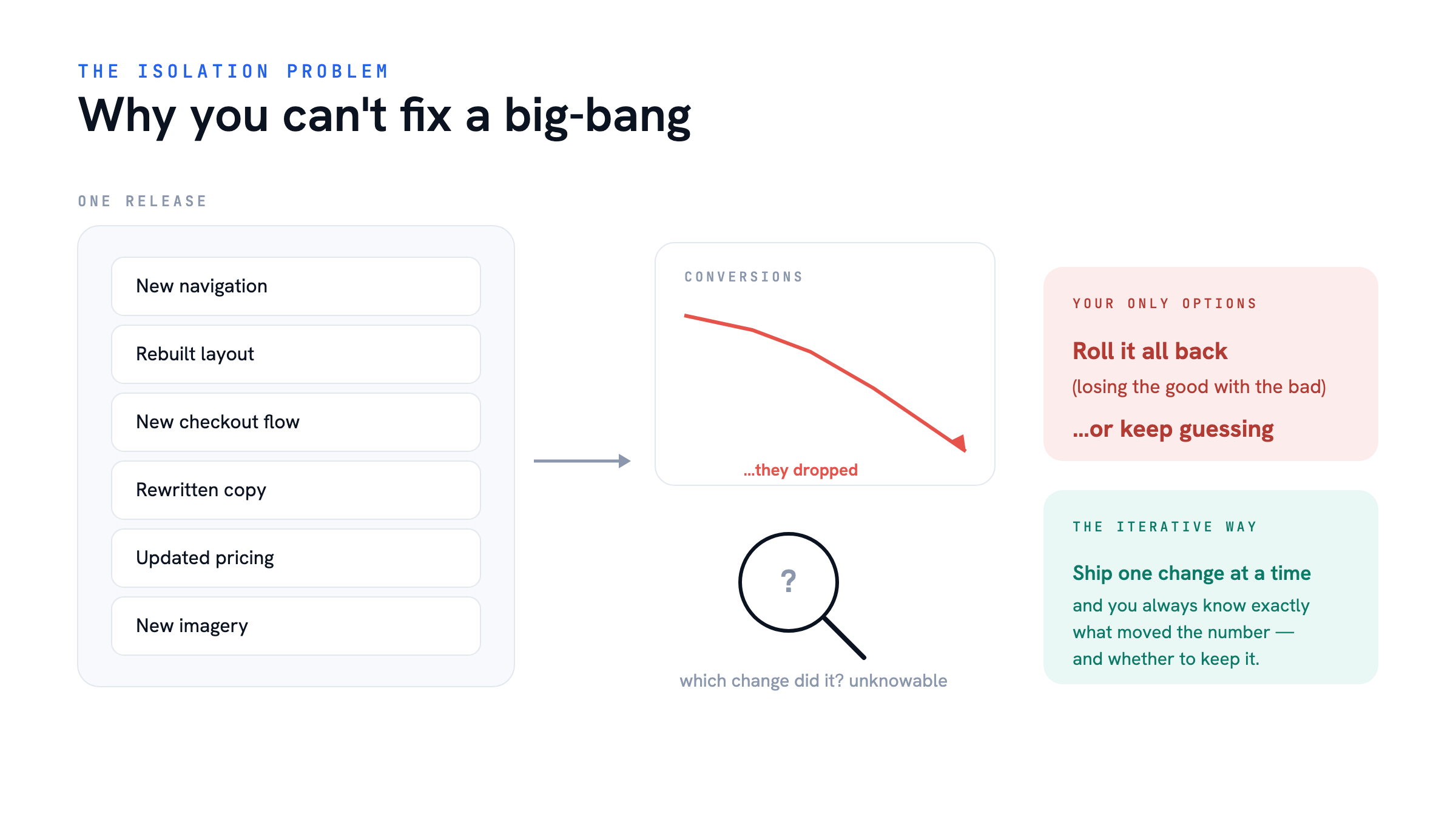
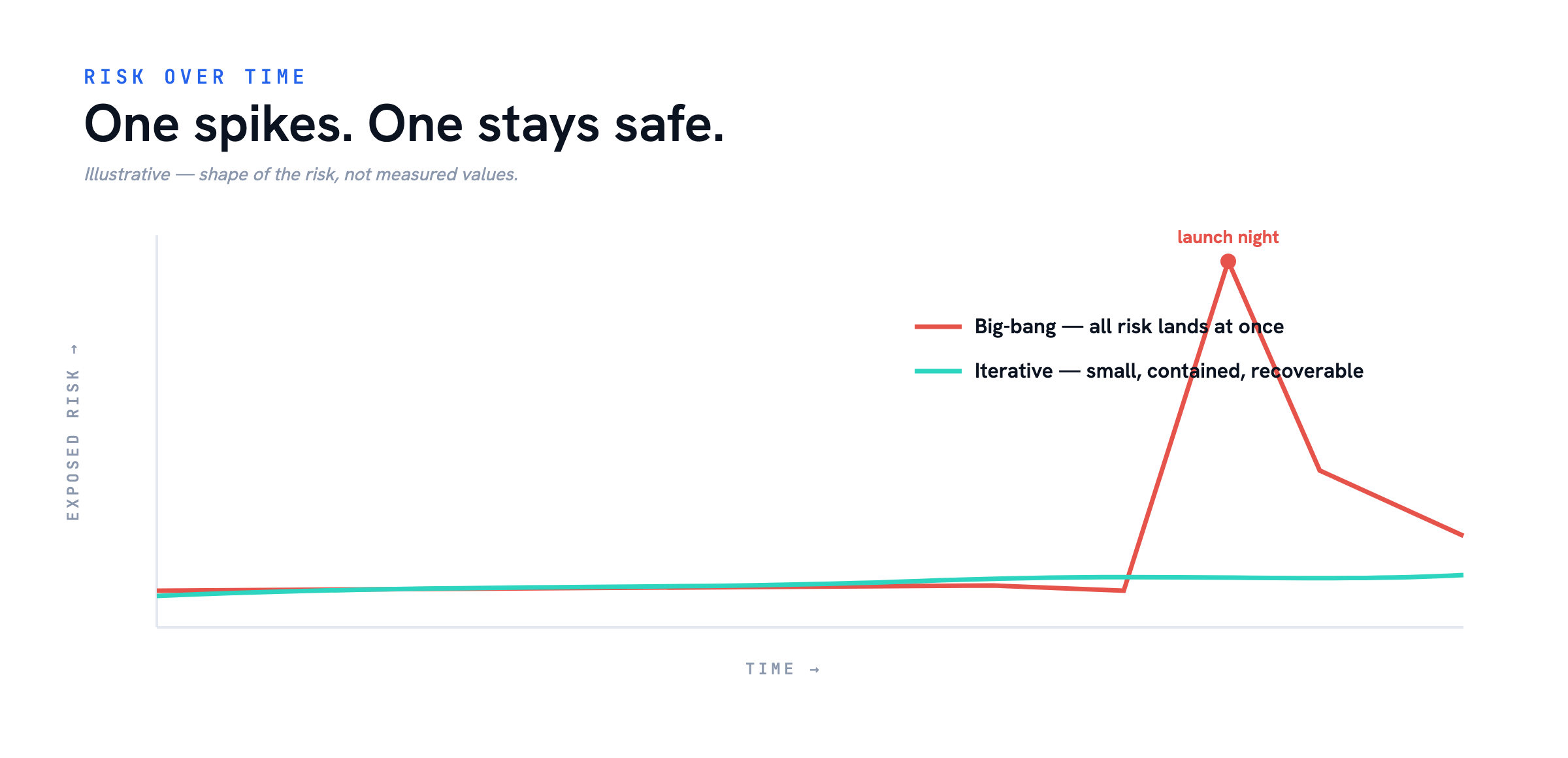
Because you only find out whether it worked after you’ve already shipped it to everyone — and by then the damage, if there is any, is done. A full relaunch bundles dozens of changes together: new navigation, new layout, new checkout, new copy. If conversions drop, you can’t tell which change caused it, so you can’t fix it cleanly. Your only options are to roll the whole thing back or to keep guessing.
This is how loyal customers get lost. If you’ve been around a while, people know how to use your site. Move everything at once with no warning and you frustrate the exact audience that already trusts you. Some of them won’t come back to relearn it. The companies that get redesign right tend to change quietly and continuously — small adjustments that improve the experience without forcing anyone to start over.
Don’t redesign just because a competitor did
A competitor’s new homepage, cart layout, or feature is not evidence that the same change will work for you. Their customers aren’t your customers, and you can’t see their numbers — for all you know, the change they just shipped is hurting them. Copying it blind means inheriting a decision you never got to test.
That doesn’t mean ignore the market. It means treat a competitor’s move as a hypothesis, not a verdict. If something looks promising, test it on your own visitors and let your data decide whether it earns a permanent place on your site.
How do you start without rebuilding everything?
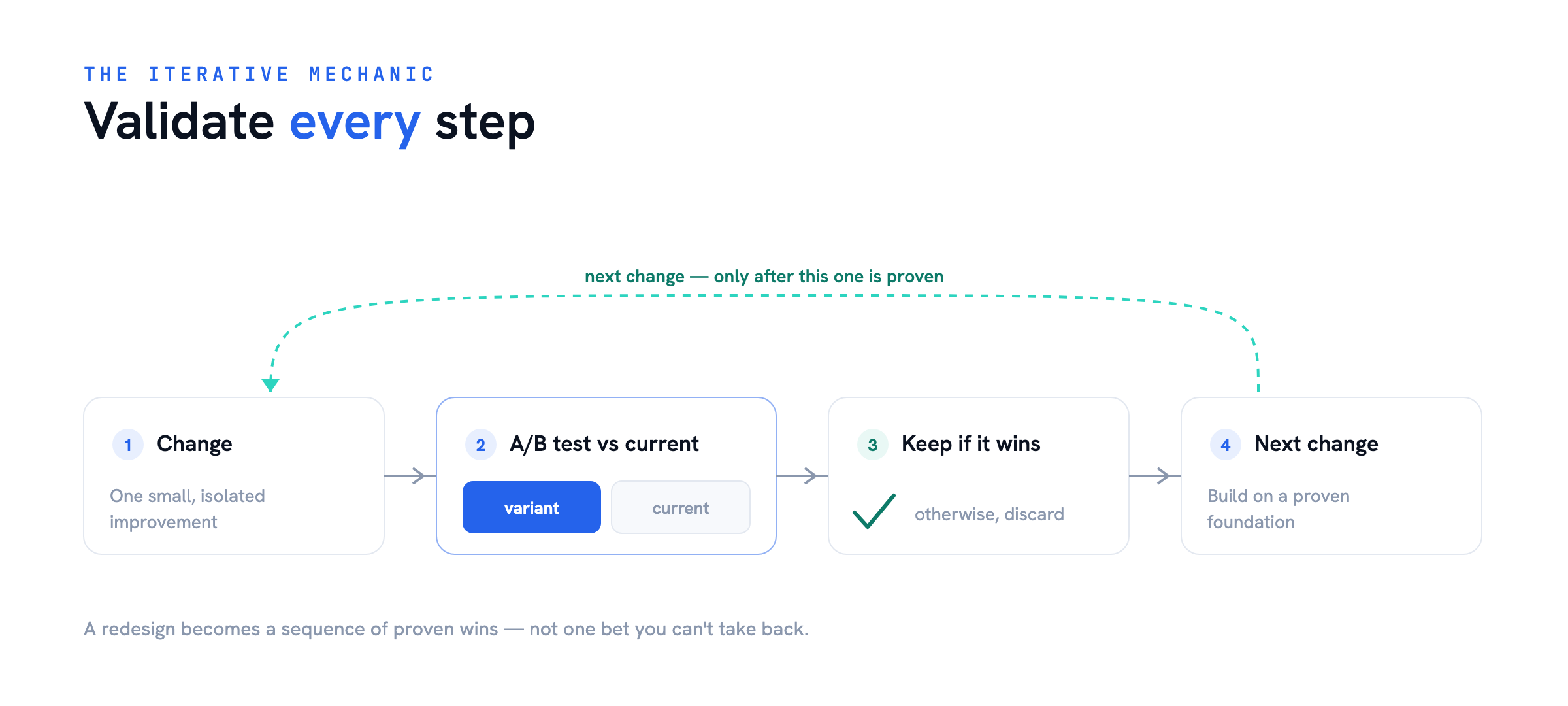
You don’t need a new platform or a six-month project to begin. Start with one page that matters — often the homepage, a key landing page, or a checkout step — and form a single, specific hypothesis: this change will improve this outcome. Test it against what’s live now. Keep what wins, drop what doesn’t, and move to the next change.
Over time those small wins compound into the better site you wanted in the first place — except you arrive there with evidence behind every decision, your customers carried along instead of jolted, and no expensive relaunch you can’t take back. A redesign should make you more money and lower your risk at the same time. Done iteratively, it does both.
If you’re weighing a redesign and want a clear-eyed read on what to change first — and what to leave alone — that’s exactly what a conversion review is for. [Book a consultation](/contact/) and we’ll take a look.