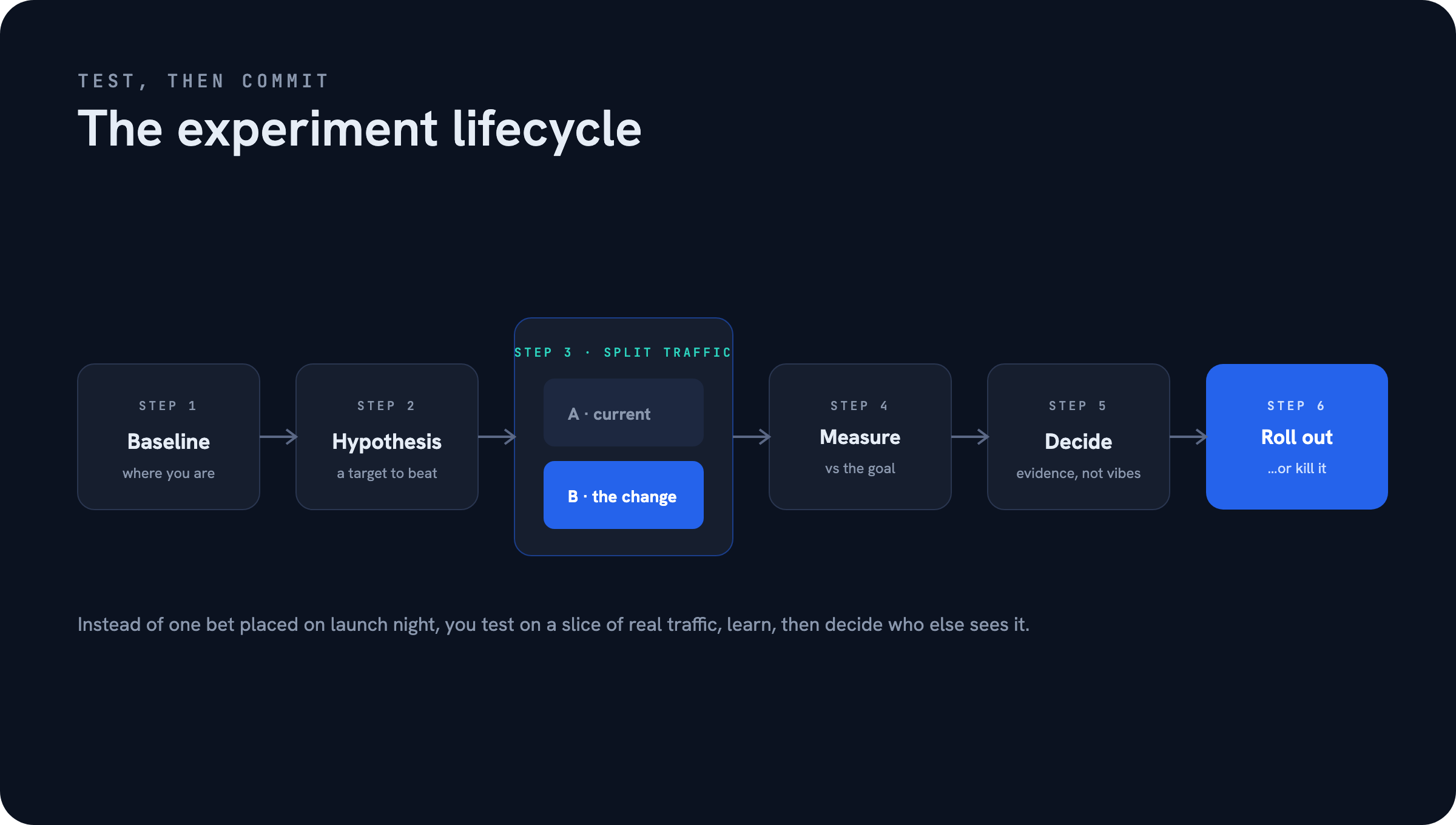
Websites and apps need refreshing to keep up, the same way a building does. But a full redesign is a bet placed on a single night’s launch — everything changes at once, and you find out whether it worked only after every customer has already seen it. Experimentation is the alternative: you test a change on a slice of real traffic, learn whether it helps or hurts, and only then decide who else sees it.
Why is a full redesign so risky?
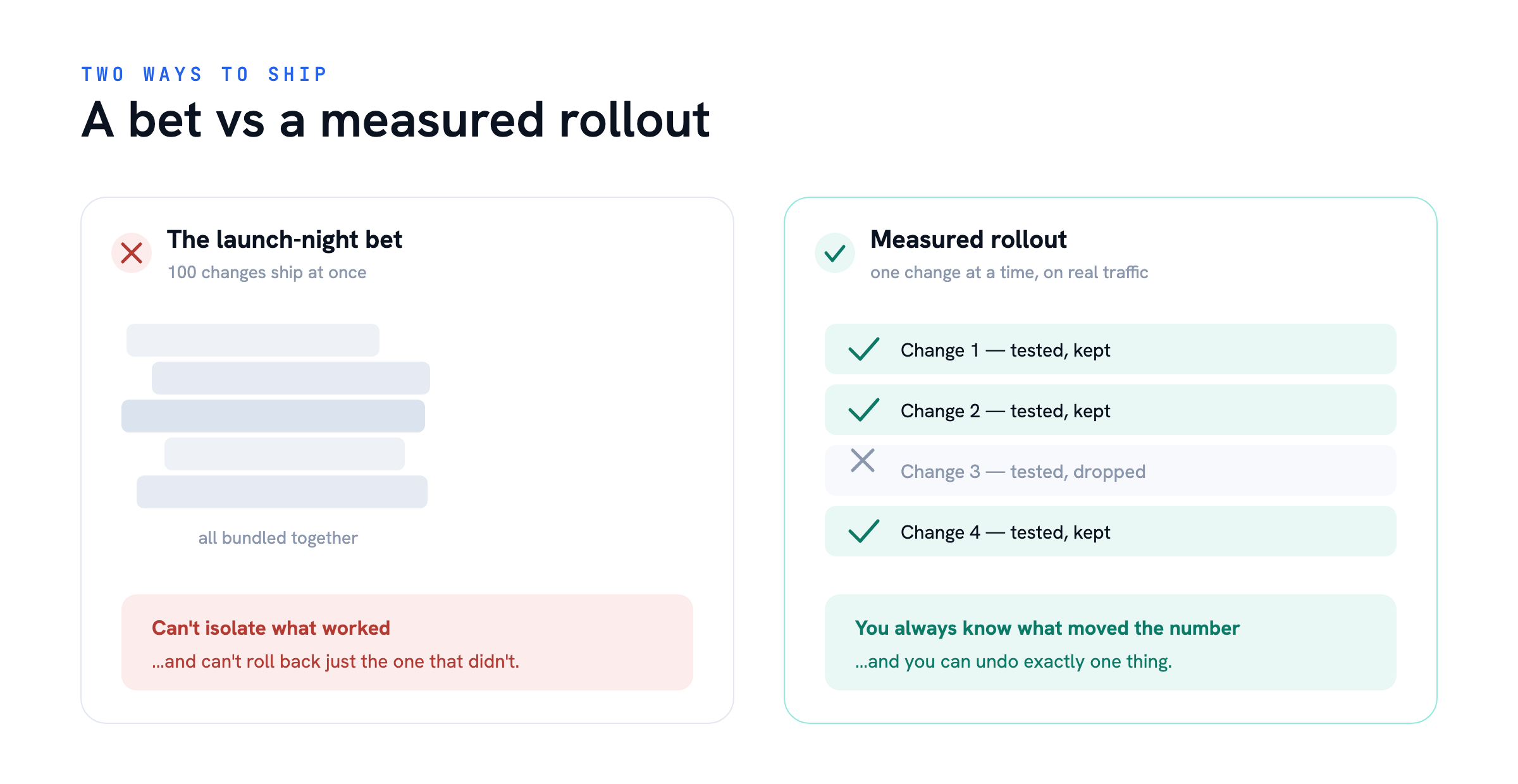
Design is itself a form of trial and error — it takes iteration to land on the right layout and outcome. The problem with a “rip and replace” launch is that everything moves together. When a hundred changes ship at once, you can’t tell which one helped a key metric and which one quietly hurt it. And if performance drops, you can’t roll back the one bad decision — you’re stuck unwinding all of them.
It’s common for a site’s conversion performance to slip after a big redesign, often meaningfully, and the cause is usually the same: the project skipped iterative testing on the way there. A better approach starts from the current baseline metrics, sets targets for improvement, and rolls changes out progressively — so existing customers aren’t jarred by a wholesale overhaul, and you learn more about how people actually behave as you go.
How do you know a new design is actually working?
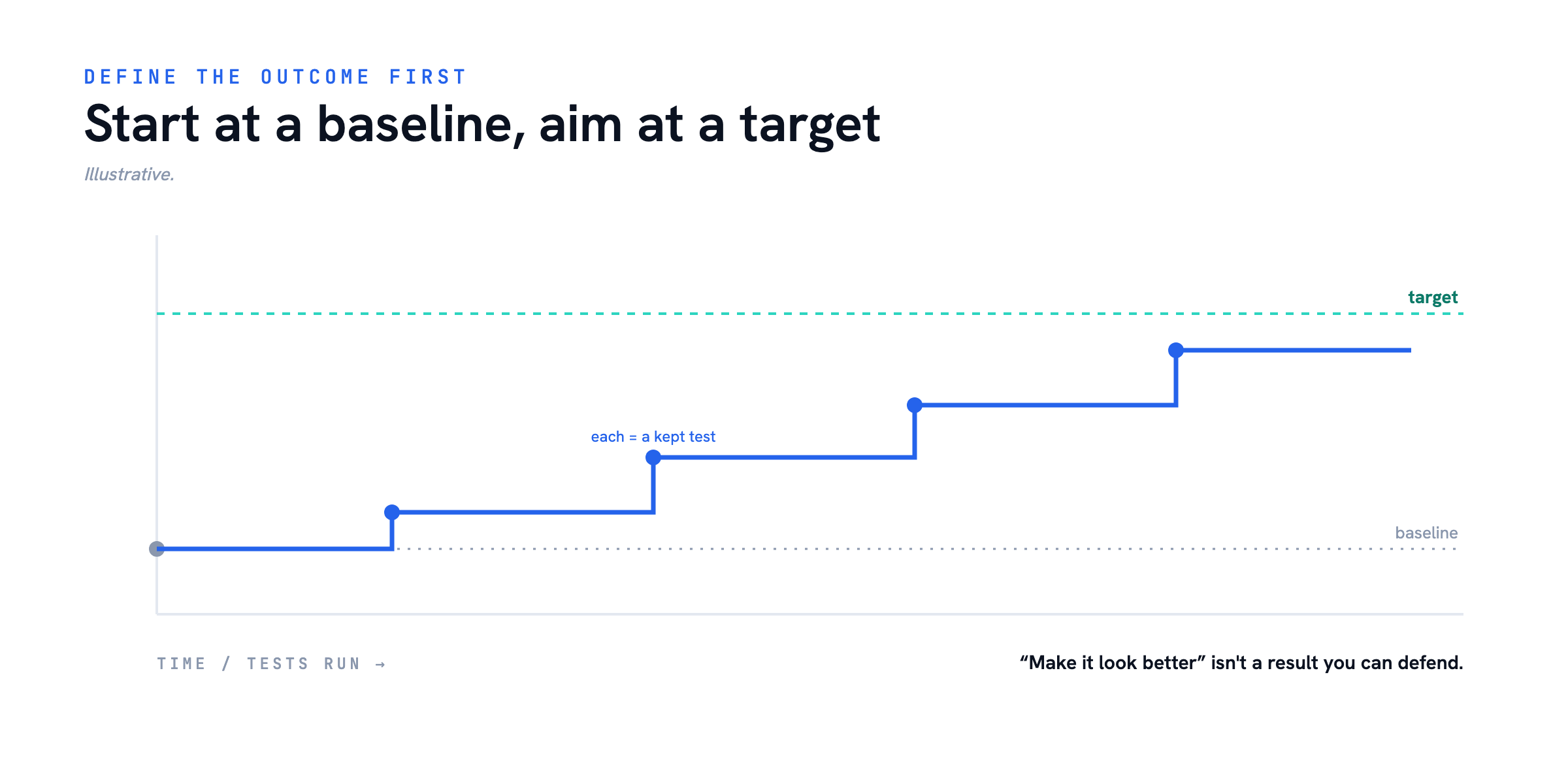
You measure it against a baseline, on real visitors, before you commit. Even the most intuitive design needs ongoing optimization; “make it look better” is not a result you can defend to the people funding the work. So define the outcome first, then test toward it.
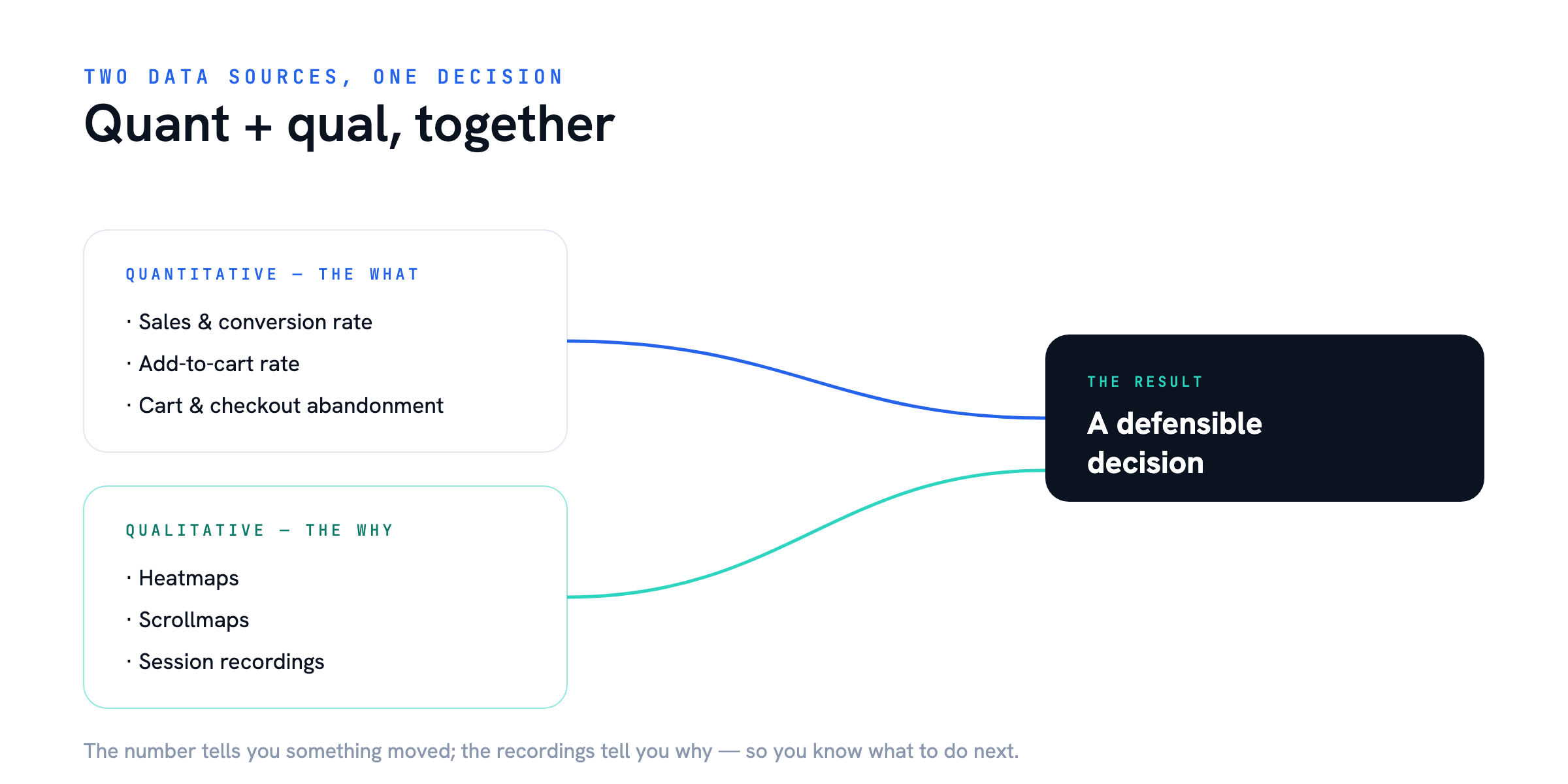
Two data sources work together here. Quantitative analytics tell you what is happening — sales, add-to-carts, checkout visits, abandonment rate. Qualitative tools like heatmaps, scrollmaps, and session recordings tell you why — how people move through a page and where they get stuck. Run A/B and multivariate tests against both, and you’re validating design decisions with evidence instead of opinion.
A useful frame for what to optimize for is the 80/20 rule: for most businesses, a small share of customers drives most of the revenue. That’s why customer lifetime value — the total worth of a customer across the whole relationship — is a better success measure than a single transaction. If you don’t know your average lifetime value or the profile of your best customers, find it in your customer data before you start. It’s the benchmark every later result gets compared against.
What should you optimize for?
Pick metrics tied to real outcomes, not vanity. For most teams that means three things working together:
- KPI improvement. Establish a baseline for each primary and secondary goal first. For
ecommerce, the primary KPI might be online sales, with add-to-carts and abandonment rate as secondary signals. You can’t show uplift without a starting point to measure from.
- User motivation. Get to know your real customers by how they navigate, not by what a focus
group says. Someone shopping for a dress before a wedding has a need you can design for. Watch behavior, build segments, and tailor the experience to what those segments are actually trying to do.
- Customer experience. Build on each win and loss, and shorten the loop between deploying a
test, learning from it, and feeding that insight back in. The faster that cycle turns, the faster results improve.
Why does experimentation beat a confident guess?
Because without a system to track, analyze, and test, even a beautiful new interface is just an informed guess about whether customers will accept it. With one, you can tell stakeholders the direction is sound — and prove it. When a variation loses or a metric trends the wrong way, you pivot and roll back to a known-good experience instead of discovering the damage weeks later.
Your biggest gains tend to come from your biggest changes. A/B testing lets you try exactly those high-potential changes while keeping the risk contained — and the proof you gather builds the stakeholder buy-in that funds the next round of work.
If you’re planning a redesign or already feel one underperforming, experimentation is how you de- risk it before it reaches every customer. [Book a consultation](/contact/) and we’ll map out where to start.