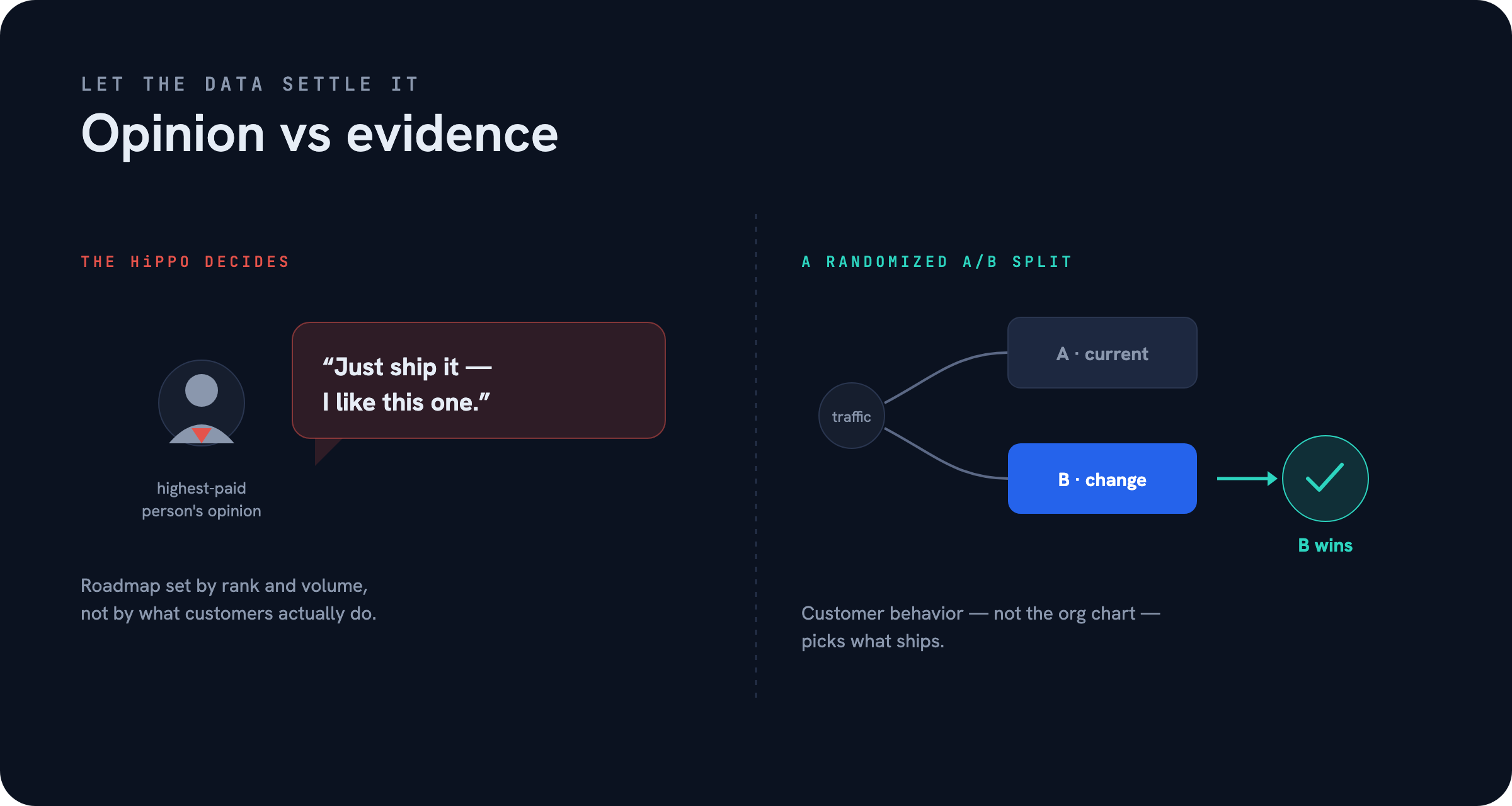
Most teams decide what to build, what to write, and how to sell based on opinion — usually the loudest or most senior opinion in the room. Experimentation replaces that with evidence. Instead of betting the roadmap on a hunch, you test the hunch on a slice of real traffic and let actual customer behavior settle the argument. Done consistently, it’s the most reliable way I know to grow a website or app without guessing.
What does it actually mean to run experiments?
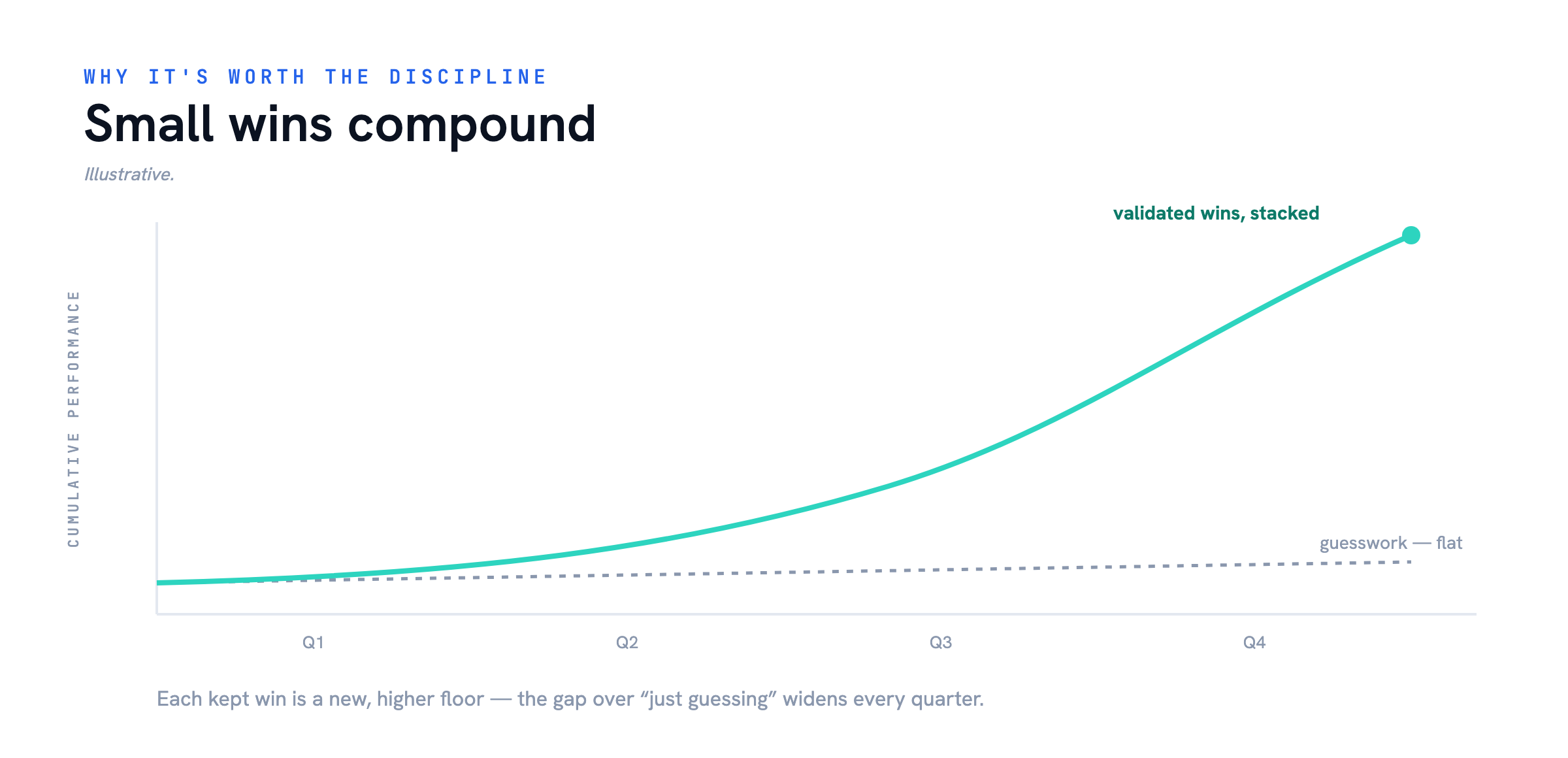
An experiment is a controlled comparison: you show one version of a page, flow, or feature to some visitors and a different version to others, then measure which one performs better against a goal you care about — sign-ups, purchases, retention. The most common form is A/B testing, where “A” is what you have now and “B” is the change you think is better. Because visitors are split at random, the difference in results is attributable to the change itself, not to luck or seasonality. That’s the whole point: you learn what works before you commit to it everywhere.
Why is experimentation worth the effort?
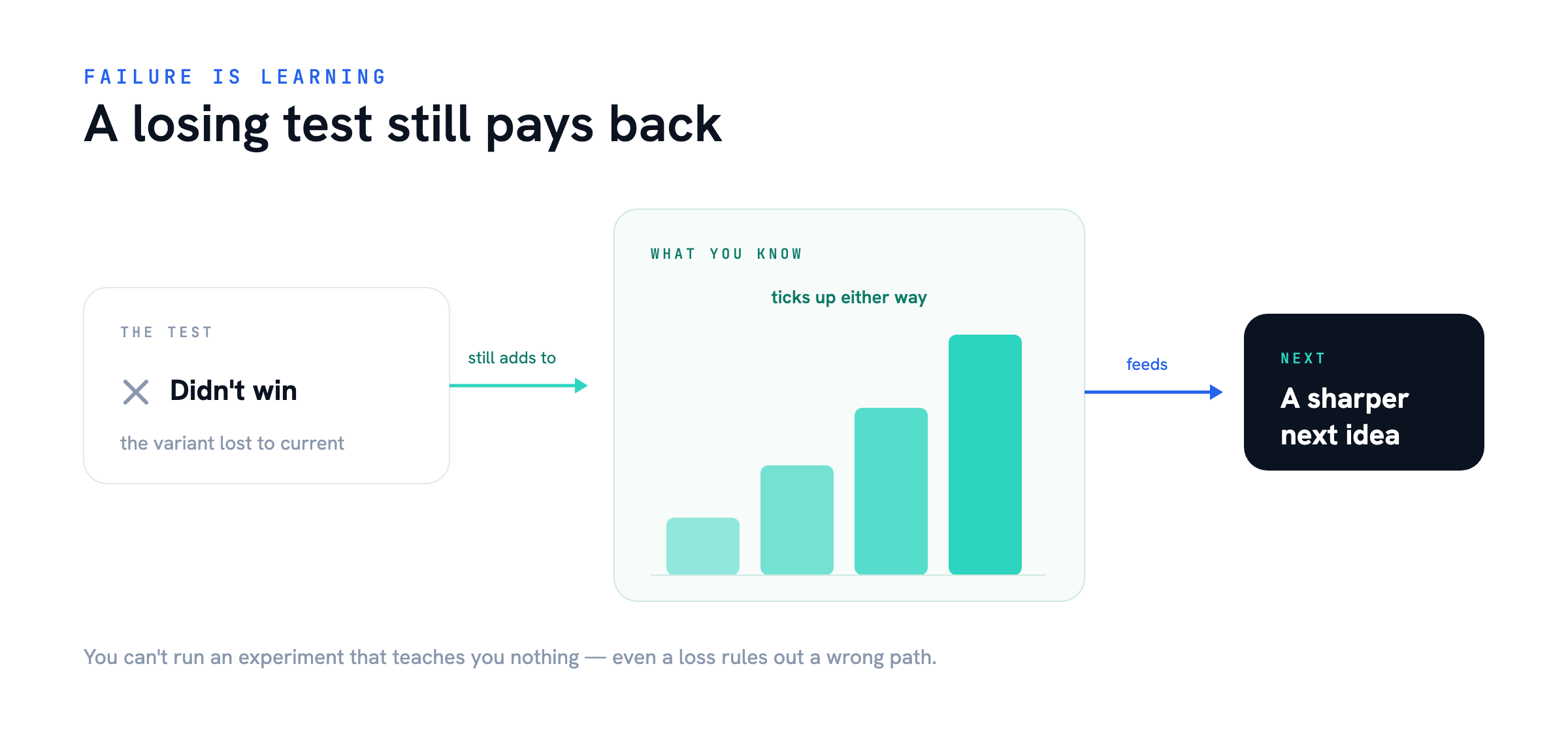
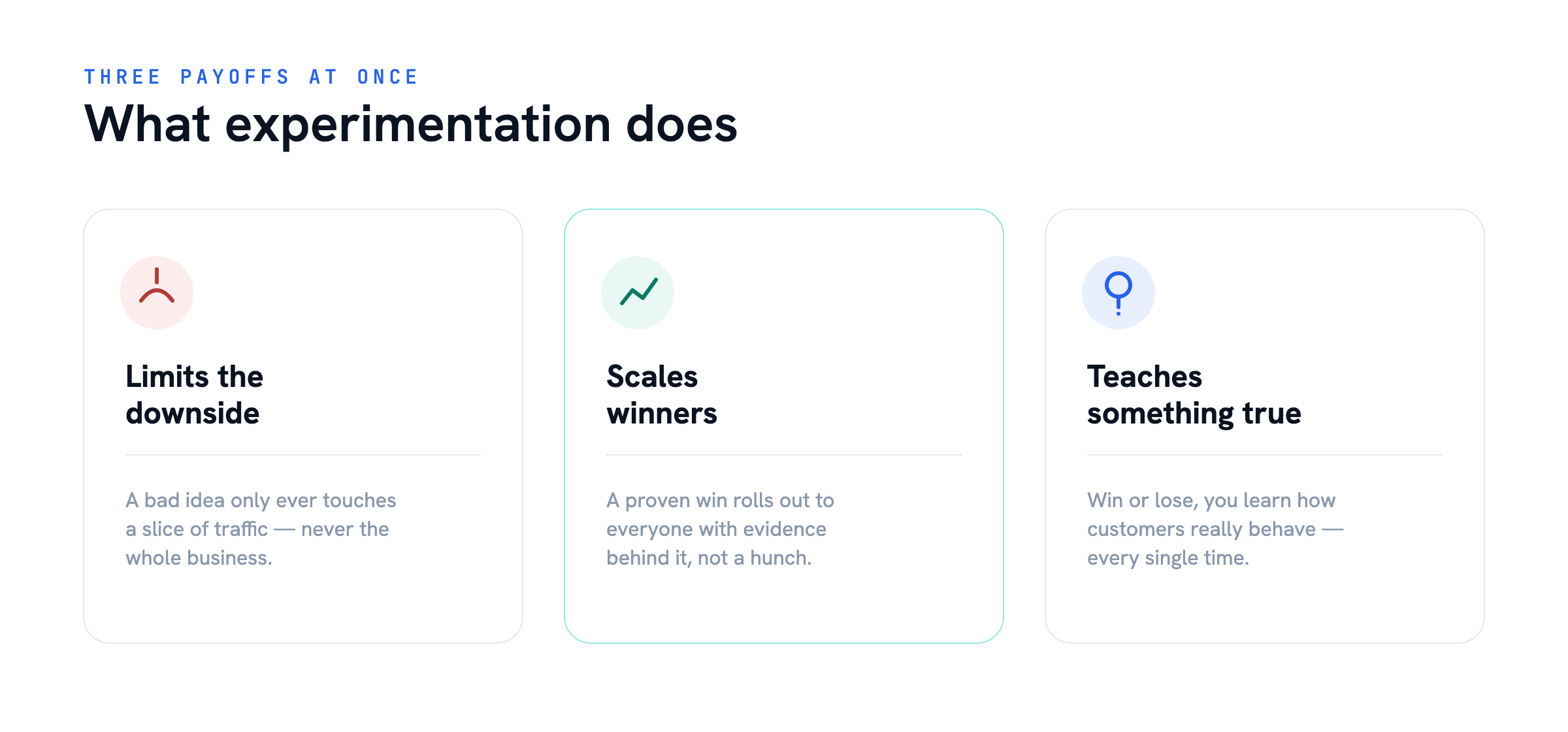
The honest answer is that most ideas don’t work as well as their authors expect — and some make things worse. Experimentation is how you find that out cheaply, on a small share of traffic, instead of expensively, after a full rollout. It does three things at once: it limits the downside of a bad idea, it gives a winning idea the evidence to scale with confidence, and it teaches you something true about your customers either way. A test that “fails” still pays you back in understanding. Over months, those small, validated wins compound into growth that’s hard to argue with because it’s documented, not asserted.
How do you build a culture of testing?
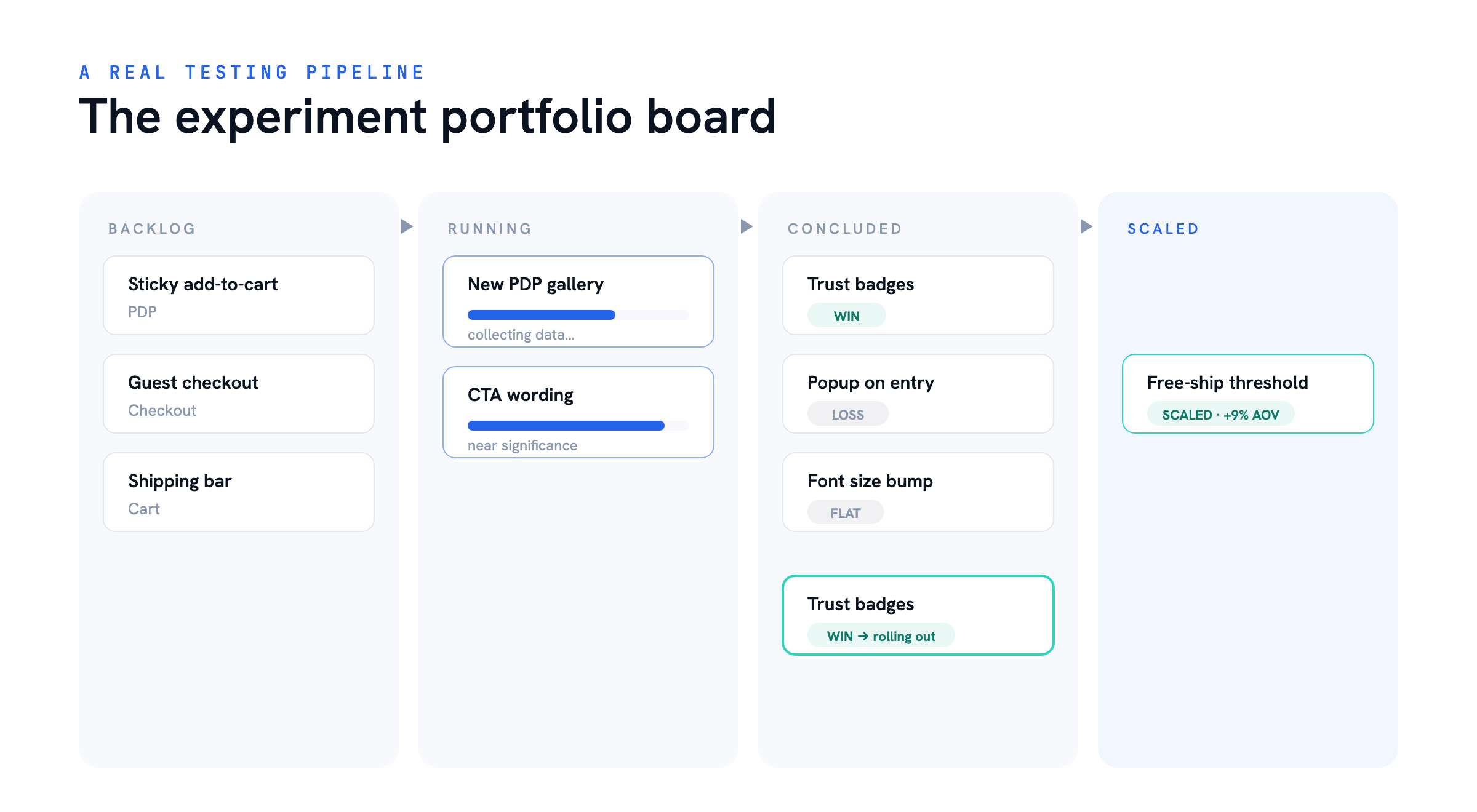
Tools are the easy part; the habit is what’s hard. A few things make it stick:
- Make decisions data-informed, not data-decorated. Agree up front on the metric a test is
meant to move, and let the result actually change what you ship — even when it contradicts the person who proposed it.
- Test the things that matter. Prioritize experiments by potential impact and how much traffic
they’ll need, not by what’s quickest to build. A clear win on a high-traffic checkout page beats a dozen tweaks on a page no one visits.
- Write down what you learn. Every test, win or lose, is a finding about your audience. Teams
that keep a running record stop relitigating settled questions and start building on each other’s work.
- Use automation and AI where they earn it. Personalization, audience targeting, and predictive
models can sharpen what you test and who sees it — but they’re inputs to the process, not a substitute for measuring whether they helped.
None of this requires a massive program to begin. It requires a willingness to ask “how would we know?” before shipping, and to accept the answer.
Where should you start?
Start with one high-traffic page and one clear hypothesis you can state in a sentence: “If we do X, then Y will improve, because Z.” Pick a single metric, run the test long enough to trust the result, and ship the winner. Then do it again. The goal in the first few months isn’t a flashy number — it’s proving to your own team that the loop works, so testing becomes the default way you make decisions rather than a special project.
If you want help figuring out where experimentation would pay off fastest on your site — and how to set up a testing program that actually changes what you ship — that’s exactly what a conversation is for. [Book a consultation](/contact/) and we’ll map it out.